
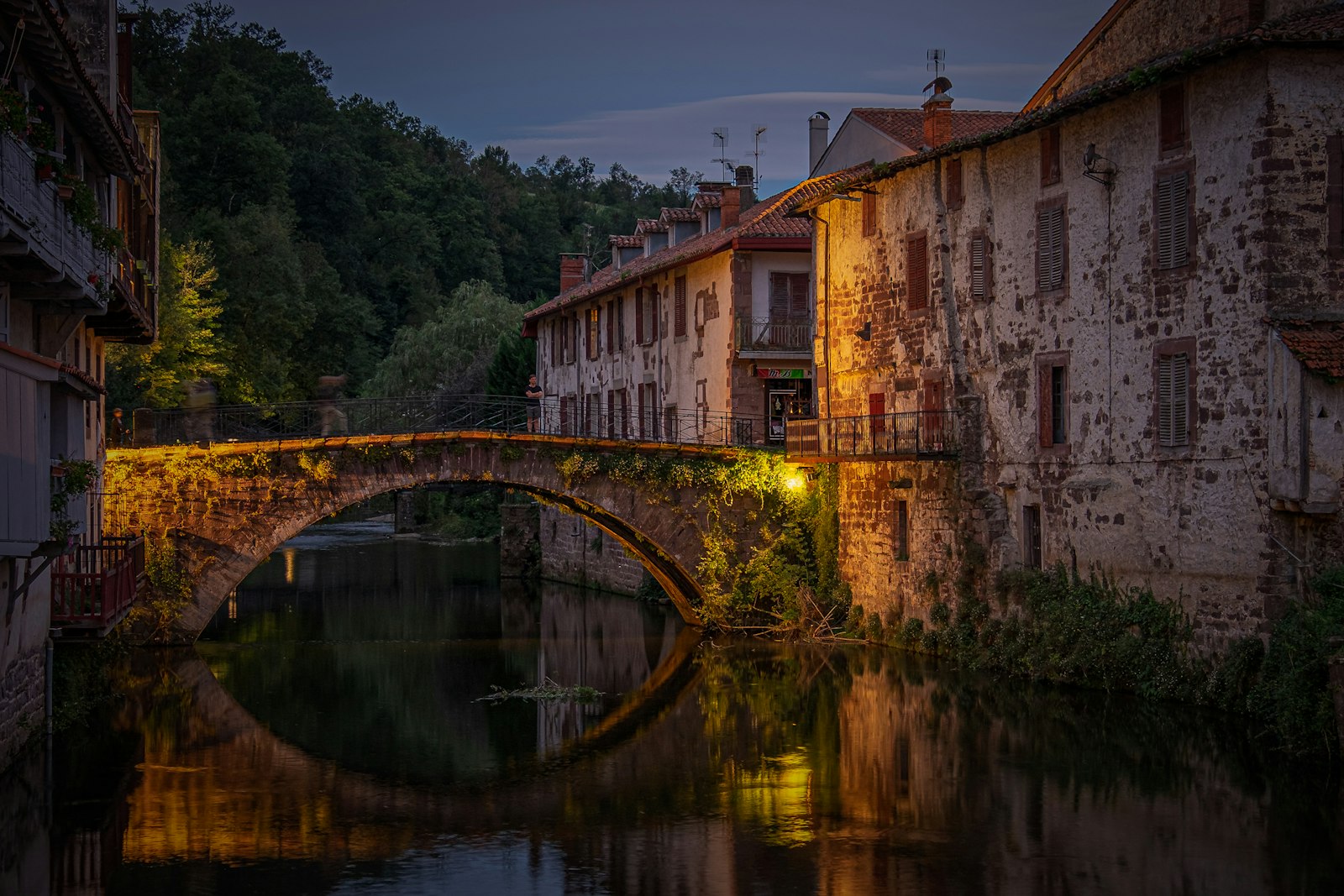
Camino Francés (French Way)
The Camino Francés (French Way) runs from Saint-Jean-Pied-de-Port, at the foot of the Pyrenees, to Santiago de Compostela: 763.7 km in 33 stages through Navarre, La Rioja, Castile and León and Galicia. In 2025, 241,996 pilgrims reached Santiago on this route.
This Camino Francés guide has everything you need to prepare it: the key facts, the stages by section with their difficulty, the variants, the ten places you shouldn’t miss, when to go month by month, how to get to the start, where to sleep, what to eat and how to get the credential and the Compostela. Further down you’ll find all 33 stages, one by one, each with its map, elevation profile and accommodation.
- The 33 stages
- Key facts
- Stages by section
- Variants
- 10 must-sees
- When to go
- Getting there
- Where to sleep
- What to eat
- Credential and Compostela
- FAQ
The 33 stages of the Camino Francés
The map shows the whole route and below it each stage with its start, finish and distance. Tap one to see its elevation profile, the villages along the way and where to sleep.
Tap a point to see the stage; zoom in to see the numbers. On mobile, tap the map to move it. Route: © OpenStreetMap contributors (ODbL).
Easy Moderate Hard
Camino Francés: key facts
| Fact | Camino Francés |
|---|---|
| Route | Saint-Jean-Pied-de-Port › Santiago de Compostela |
| Distance | 763.7 km |
| Stages | 33 (average 23.1 km) |
| Total ascent | 10,941 m |
| Highest point | 1,512 m, in the Montes de León, before the descent to Ponferrada |
| Albergues | 503 (73 public); 161 open all year |
| Albergue bed | €16.10 on average; about €531 for the whole Camino |
| Asphalt or paved | 35% of the route |
| Longest section without a fountain, bar or shop | 16 km |
| Minimum for the Compostela | The last 100 km, from A Pena (Paradela); Sarria is 114.2 km away |
| Backpack transfer with Correos | From Roncesvalles, March to October |
The stages of the Camino Francés by section
The Camino Francés crosses four regions and each section has its own character: the Pyrenees and the valleys of Navarre, the vineyards of La Rioja, the Meseta and the Montes de León in Castile and León, and green Galicia all the way to Santiago.
| Section | From › to | Stages | Km | Ascent (m) |
|---|---|---|---|---|
| Navarre | Saint-Jean-Pied-de-Port › Los Arcos | 6 | 132.8 | 3,161 |
| La Rioja | Los Arcos › Santo Domingo de la Calzada | 3 | 76.8 | 1,061 |
| Castile and León | Santo Domingo de la Calzada › Villafranca del Bierzo | 16 | 373.7 | 3,174 |
| Galicia | Villafranca del Bierzo › Santiago de Compostela | 8 | 180.4 | 3,545 |
Navarre: 6 stages and 132.8 km
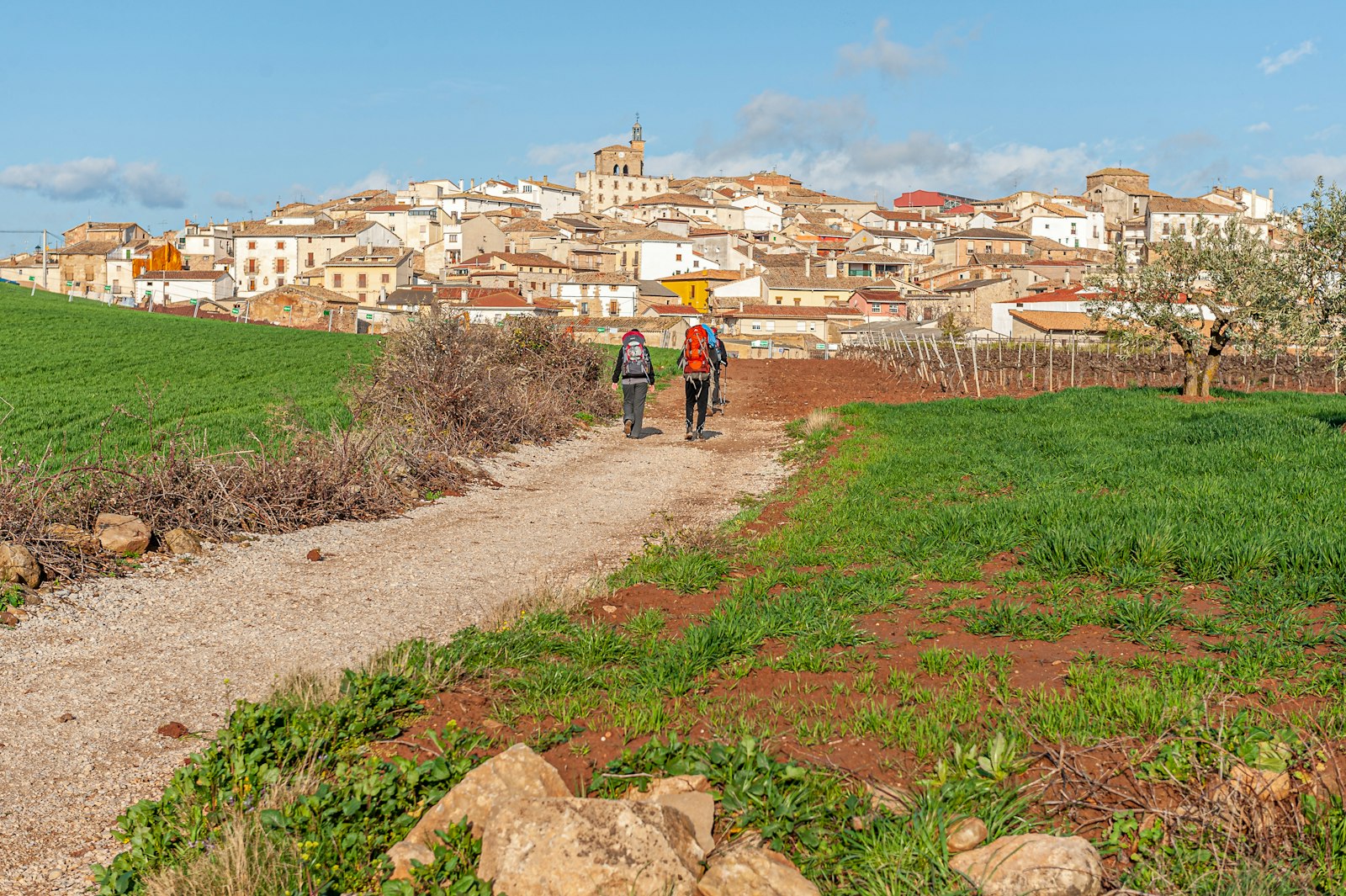
The first stage is the toughest of the whole Camino Francés (difficulty 5 out of 5): it climbs into the Pyrenees over the Lepoeder pass (1,430 m) and descends to Roncesvalles. Then come Zubiri, Pamplona, Puente la Reina, Estella and Los Arcos. See the Saint-Jean-Pied-de-Port › Roncesvalles stage.
La Rioja: 3 stages and 76.8 km
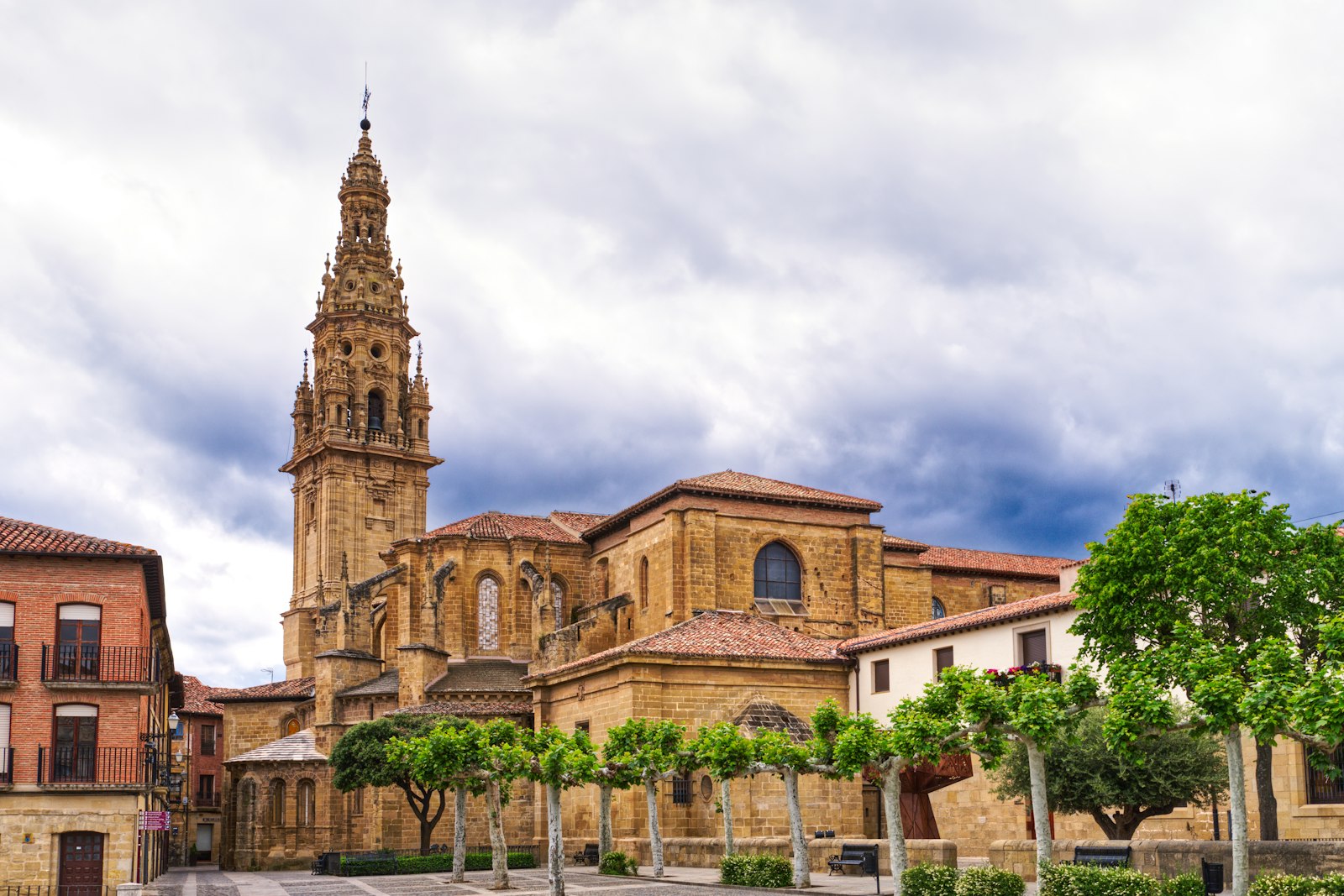
Three stages among vineyards, from Los Arcos to Santo Domingo de la Calzada via Logroño and Nájera. The longest is Logroño to Nájera, at 28.5 km. See the Logroño › Nájera stage.
Castile and León: 16 stages and 373.7 km
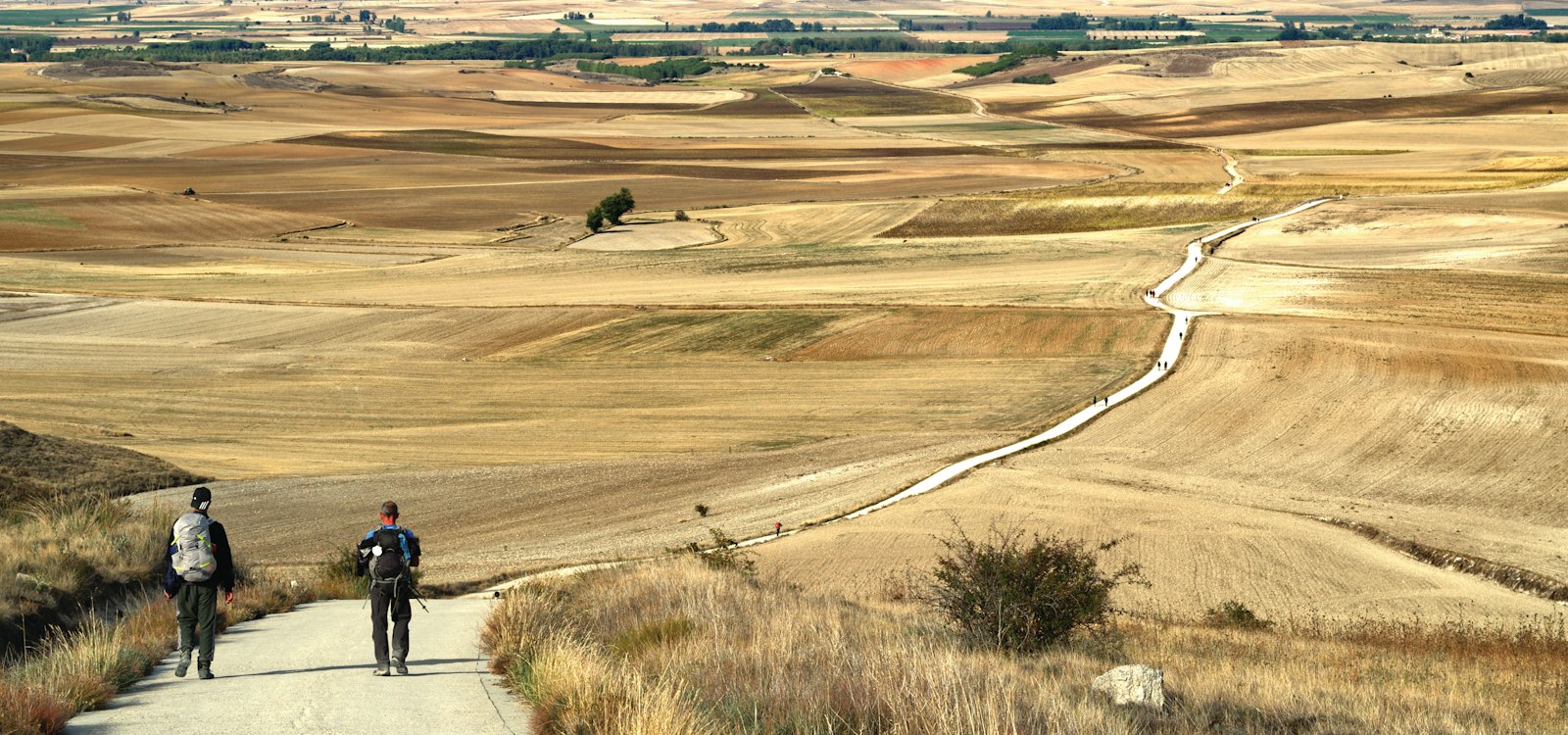
The longest section: 16 stages and 373.7 km through Burgos, the Palencia Meseta, Sahagún, León and Astorga. The descent from the Montes de León towards Ponferrada is the most demanding part of the section and passes the highest point of the Camino Francés, at 1,512 m. See the Foncebadón › Ponferrada stage.
Galicia: 8 stages and 180.4 km
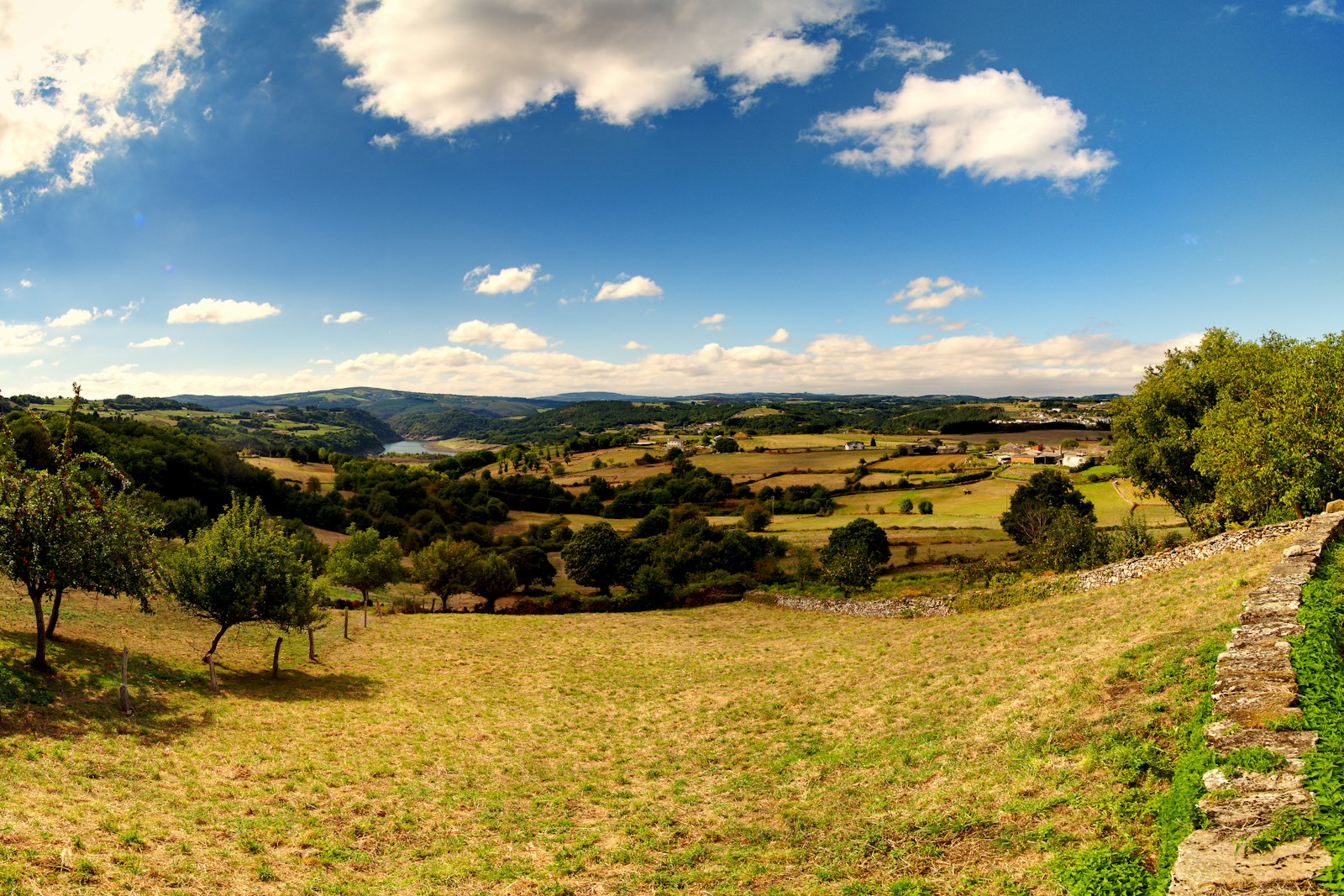
Eight stages from Villafranca del Bierzo. The climb to O Cebreiro is the hardest (difficulty 4 out of 5, 27.8 km), and from Sarria you walk the last 114.2 km, the busiest. See the Villafranca del Bierzo › O Cebreiro stage.
Variants of the Camino Francés
- Via Valcarlos (stage 1B): the alternative to the climb over Lepoeder between Saint-Jean-Pied-de-Port and Roncesvalles, compulsory in winter.
- Via Villar de Mazarife (stages 21B and 22B): leaves León and reaches Astorga on an alternative path to the one through San Martín del Camino.
- Via Samos (stage 28B): between Triacastela and Sarria, it passes the monastery of Samos.
- Camino Francés through Aragon: 162.2 km and 6 stages from Somport, via Jaca, until it joins the main route at Puente la Reina, with the variant via San Juan de la Peña.
10 must-sees on the Camino Francés
Ten places worth stopping for, in the order they appear on the Camino. The last two are on the Aragon route.
- Porte Saint-Jacques · Saint-Jean-Pied-de-Port (stage 1A). The Rue de la Citadelle follows the pilgrim route from the Porte Saint-Jacques, a World Heritage Site, to the Porte d'Espagne, between Navarre-style houses by the river.
- Church of San Juan Bautista · Obanos (stage 4). A neo-Gothic church that holds a 12th-century Romanesque image of Nuestra Señora la Blanca.
- Church of San Miguel Arcángel · Estella (stage 5). 12th century, with a Romanesque doorway; right on the route there is also the Santo Sepulcro, from the 14th century.
- Monastery of Santa María la Real · Nájera (stage 8). Founded in 1052 by King García Sánchez III, who according to tradition found an image of the Virgin with a jar of lilies in a cave.
- Monastery of San Juan de Ortega · San Juan de Ortega (stage 11). A 12th-century monastery with its Romanesque church, the saint's tomb, the chapel of San Nicolás de Bari and the Hieronymite cloister.
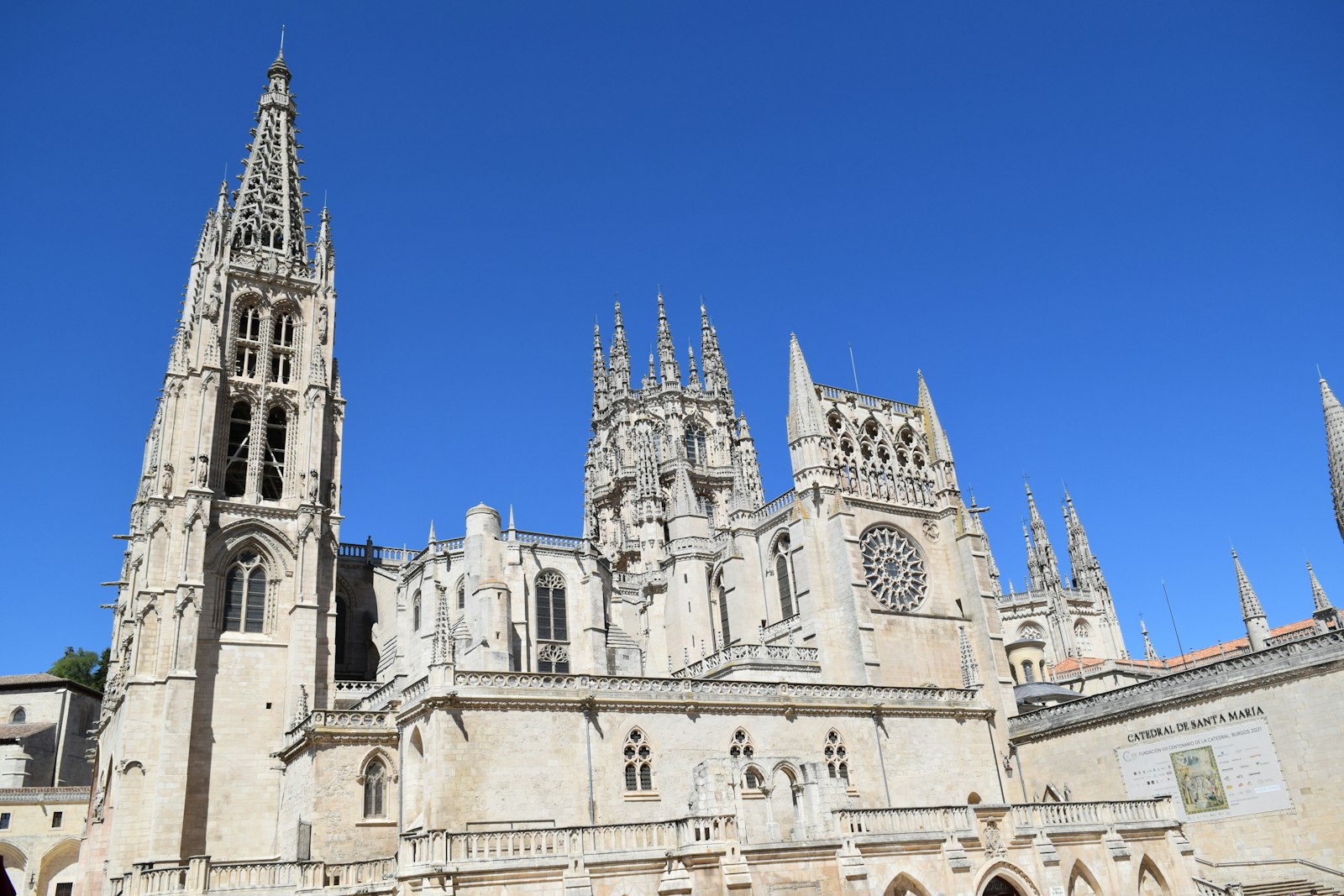
- Burgos Cathedral · Burgos (stage 12). Gothic, begun in 1221 on the orders of Ferdinand III the Saint, and a World Heritage Site since 1984.
- Church of San Martín de Tours · Frómista (stage 15). 11th century, one of the finest examples of Spanish Romanesque, right in the centre and open every day.
- Churches of San Tirso and San Lorenzo · Sahagún (stage 18). Sahagún is the capital of Mudéjar Romanesque, which swaps stone for brick; San Tirso dates from the 12th century.
- Cathedral of San Pedro · Jaca (Camino Francés through Aragon, stage 1). From the 11th and 12th centuries, one of the first Romanesque buildings in Spain, with the chrismon between two lions on the tympanum. Entry is free.
- Church of El Salvador · Santa Cilia (Camino Francés through Aragon, stage 2A). From the 17th and 18th centuries, with a 16th-century Renaissance altarpiece and the 13th-century Romanesque image of Nuestra Señora de la Peña.
When to walk the Camino Francés
From June to September temperatures are mild and at least eight out of ten albergues are open; in July and August average highs reach 27.3 °C. From November to February fewer than half of the albergues are open, and from December to February fewer than a third. May, June, August and September are the months with the most pilgrims: more than 34,000 each in 2025.
| Month | Pilgrims 2025 | Avg. high | Avg. low | Albergues open |
|---|---|---|---|---|
| January | 1,415 | 8.8 °C | 0.9 °C | 28 % |
| February | 1,695 | 10.8 °C | 1.2 °C | 30 % |
| March | 6,805 | 14.4 °C | 3.0 °C | 58 % |
| April | 25,521 | 15.9 °C | 4.5 °C | 91 % |
| May | 35,283 | 19.7 °C | 7.6 °C | 95 % |
| June | 35,187 | 24.3 °C | 10.9 °C | 95 % |
| July | 29,162 | 27.3 °C | 13.0 °C | 95 % |
| August | 34,493 | 27.3 °C | 13.0 °C | 95 % |
| September | 35,640 | 23.8 °C | 10.7 °C | 95 % |
| October | 29,890 | 18.1 °C | 7.7 °C | 87 % |
| November | 5,433 | 12.4 °C | 4.0 °C | 49 % |
| December | 1,472 | 9.3 °C | 1.8 °C | 25 % |
How to get to the start of the Camino Francés from Madrid
The time shown is for the fastest direct train from Madrid to the nearest station.
| Start | Fastest train | How |
|---|---|---|
| Saint-Jean-Pied-de-Port | 3 h 24 min | Train to Pamplona and bus Pamplona–Saint-Jean-Pied-de-Port (Conda/Alsa), seasonal service, ~1 h 45 min. Alternative: travel to Bayonne and take the French regional train. |
| Roncesvalles | 3 h 24 min | Train to Pamplona and Autocares Artieda bus Pamplona–Roncesvalles (~1 h 10 min), daily except Sundays and public holidays. |
| Pamplona | 3 h 24 min | Direct train. |
| Logroño | 3 h 43 min | Direct train. |
| Burgos | 1 h 35 min | Direct train. |
| León | 2 h 00 min | Direct train. |
| Astorga | 3 h 03 min | Direct train. |
| Ponferrada | 4 h 18 min | Direct train. |
Where to sleep on the Camino Francés
The Camino Francés has 503 albergues, 73 of them public, and 161 are open all year. A dormitory bed costs €16.10 on average, so sleeping in albergues for the whole Camino comes to about €531. Each stage lists the accommodation at the end of the day with price, beds and phone number, and in the accommodation finder you can filter them by town.
What to eat on the Camino Francés
Navarre
- In Saint-Jean-Pied-de-Port you'll easily find Basque and Béarn produce, above all Ossau-Iraty sheep's cheese (AOC), and Irouléguy mountain wine, promoted in the 12th century by the monks of Roncesvalles.
- Chistorra sausage is the great ambassador, and in Zubiri it is made in the village itself.
- In Pamplona, Idiazábal cheese turns up in dishes, pintxos and even desserts.
- There is wine at the Muruzábal wineries (with tastings) and at the Mañeru cooperative, right on the route.
- In Estella, traditional pastries: txantxigorri cakes, made with pork cracklings and lard, and alpargatas, made with puff pastry and almond cream.
La Rioja
- In Logroño, tapas street by street: every bar has its star tapa, from grilled mushrooms to more modern creations, always with Rioja wine.
- Navarrete is a land of wine and pottery.
- In Santo Domingo de la Calzada, ahorcaditos (scallop-shaped pastries filled with almond cream), the borrachuelos made by the Bernardine nuns, and cod a la riojana as a farewell to La Rioja.
Castile and León
- In Burgos, roast suckling lamb (lechazo) is the star dish, with asadores around the cathedral; for tapas, San Lorenzo and Sombrerería streets, with the «cojonudos», tapas of fried chorizo or morcilla, and for dessert, yemas de Burgos.
- In Castrojeriz, garlic soup, which has its own fair and appears on menus all along this section.
- In Frómista, vegetable menestra with a sofrito of lean pork, veal and onion, and cured sheep's cheese from Tierra de Campos.
- Lechazo in Villalcázar de Sirga, sweets from the Poor Clares of Carrión de los Condes (lemon biscuits, amarguillos, mantecadas, Santa Clara cakes) and craft beer in Ledigos.
- In Mansilla de las Mulas, the matanza (with special days in winter), cecina and bacalao al ajo arriero.
- León has shops selling cecina and vacuum-packed cured meats for your backpack around the Plaza Mayor and the Barrio Húmedo.
- Along the Órbigo river, trout soup.
- Astorga is the capital of cocido maragato, which is eaten back to front (meats, vegetables and chickpeas, with the soup at the end), and of sweets: mantecadas (PGI) and puff pastries.
- In Ambasmestas they make a prized goat's cheese.
Galicia
- From O Cebreiro, its Designation of Origin cheese shaped like a chef's hat, and empanadas with endless fillings all the way to Santiago.
- Trout and eels in Samos, where they make Manxarín biscuits from a monastery recipe.
- Portomarín has eel empanada and its own cake.
- In Melide, pulpo a la gallega with Ribeiro wine, plus melindres and ricos; Arzúa-Ulloa cheese dominates the last stages, along with San Simón and tetilla.
- In Santiago, seafood and scallops, and tarta de Santiago.
Through Aragon
- Jaca has famous pastry shops: jaqueses, coronitas de Santa Orosia, condes, patatas de Jaca, teclas, lazos, corazones and pastillas ansotanas.
- From the local cuisine, migas aragonesas with egg and grapes, roast ternasco and the hearty olla jacetana.
Camino Francés guides by starting point
If you're not walking the whole route, we have a complete guide for each usual starting point, with its stages, accommodation, elevation gain and when to go:
- Camino Francés from León: 304.5 km and 13 stages.
- Camino Francés from Ponferrada: 203.6 km and 9 stages.
- Camino Francés from O Cebreiro: 152.6 km and 7 stages.
- Camino Francés from Sarria: 114.2 km and 5 stages, with a PDF guide.
Credential and Compostela
The credential is the document that identifies you as a pilgrim: it gives you access to albergues and is the proof you need to request the Compostela. The official model is distributed by the Pilgrim's Office of Santiago Cathedral and is available from parishes, Friends of the Camino associations, albergues and authorised confraternities. Stamps are given mainly in albergues, but also in parishes, monasteries, cathedrals, hostels and town halls.
To get the Compostela you must walk at least the last 100 km to Santiago without interruption (200 km by bike). If you only walk the minimum distance, get a stamp at the start and end of each stage, with the date. It is free and is collected in person at the Pilgrim's Office, at Rúa Carretas 33, open every day from 10:00 to 19:00 except 25 December and 1 January; you need to register beforehand with a QR code.
2027 is a Compostela Holy Year because 25 July falls on a Sunday: there will be more pilgrims than usual and it is best to book further ahead, especially on the last 100 km.
Frequently asked questions about the Camino Francés
How long is the Camino Francés?
763.7 km from Saint-Jean-Pied-de-Port to Santiago de Compostela, divided into 33 stages averaging 23.1 km.
Where do you have to start the Camino Francés to get the Compostela?
You must walk at least the last 100 km, which start at A Pena (Paradela). The most popular starting point is Sarria, 114.2 km from Santiago.
What is the hardest stage of the Camino Francés?
The first, from Saint-Jean-Pied-de-Port to Roncesvalles (24.2 km), which crosses the Pyrenees over the Lepoeder pass. In Galicia, the climb from Villafranca del Bierzo to O Cebreiro (27.8 km).
How much does it cost to sleep on the Camino Francés?
An albergue bed costs €16.10 on average, about €531 if you sleep in albergues for the whole Camino. There are 503 albergues, 73 of them public.
What is the best time of year to walk the Camino Francés?
June to September combine mild temperatures with at least eight out of ten albergues open. May, June, August and September are the months with the most pilgrims.
Can you send your backpack ahead on the Camino Francés?
Yes: Correos offers backpack transport from Roncesvalles from March to October.
What about the climb over the Pyrenees in winter?
In winter you must take the Valcarlos variant instead of climbing over the Lepoeder pass.
Short on time? The Camino Francés from Sarria in 5 days covers the last 114 km, and with the planner you choose your days and we prepare the itinerary for you. To prepare your trip, see the Camino de Santiago practical guides or compare other routes on all the Caminos.
All 33 stages, one by one
Each stage with its distance and difficulty. Tap a stage to see the map, the villages and where to sleep.