
Vía de la Plata (Silver Way)
The Vía de la Plata (Silver Way) is the great southern Camino: it leaves Seville and heads north through Extremadura and Castile and León, largely following the Roman road that linked Mérida with Astorga. In this guide you have it in 27 stages and 702.9 km from Seville to Astorga, where it joins the Camino Francés. From Granja de Moreruela, in Zamora, you can instead take the Camino Sanabrés, which goes straight to Santiago via Ourense.
Here you have the key facts about the Vía de la Plata, the map, the stages by section, the two ways of reaching Santiago, the must-sees, when to go month by month, how to get to Seville, where to sleep, what to eat and how to get the Compostela. In 2025, 8,833 pilgrims reached Santiago along the Vía de la Plata.
- The 27 stages
- Key facts
- Stages by section
- Sanabrés or Astorga
- Must-sees
- When to go
- Getting there
- Where to sleep
- What to eat
- Tips
- Credential and Compostela
- FAQ
The 27 stages of the Vía de la Plata
The map shows the whole route and below it each stage with its start, finish and distance. Tap one to see its elevation profile, the villages along the way and where to sleep.
Tap a point to see the stage; zoom in to see the numbers. On mobile, tap the map to move it. Route: © OpenStreetMap contributors (ODbL).
Easy Moderate Hard
Vía de la Plata essentials
| Fact | Vía de la Plata |
|---|---|
| Route | Seville › Astorga (702.9 km in 27 stages) |
| To Santiago via the Camino Sanabrés | 970.4 km from Seville (turn-off at Granja de Moreruela) |
| To Santiago via Astorga and the Camino Francés | 959.1 km from Seville |
| Average per stage | 26.0 km; the longest, 38.3 km |
| Total ascent | About 6,232 m from Seville to Astorga |
| Highest point | 1,150 m between Fuenterroble de Salvatierra and San Pedro de Rozados (1,361 m on the Sanabrés) |
| Albergues | 148 between the Vía de la Plata and the Sanabrés (68 public) |
| Albergue bed | €16.9 on average |
| Asphalt or paved | 37% of the route |
| Longest section without a fountain, bar or shop | 38.6 km |
| Minimum for the Compostela | Ourense, about 104 km from Santiago, on the Sanabrés |
| Pilgrims in 2025 | 8,833 |
The stages of the Vía de la Plata by section
The Vía de la Plata is a Camino of long distances: dehesas, cereal fields and monumental cities separated by long stages with few villages. The climbing is moderate, but the heat, the distances and the lack of services on some sections make it more demanding than it looks on the map.
| Section | From › to | Stages | Km | Ascent (m) |
|---|---|---|---|---|
| Andalusia | Seville › Almadén de la Plata | 1–3 | 68.4 | 918 |
| Extremadura | Almadén de la Plata › Aldeanueva del Camino | 4–15 | 336.9 | 2,983 |
| Castile and León | Aldeanueva del Camino › Granja de Moreruela | 16–23 | 203.3 | 1,887 |
| From Granja de Moreruela to Astorga | Granja de Moreruela › Astorga | 24–27 | 94.3 | 444 |
Andalusia: 3 stages and 68.4 km
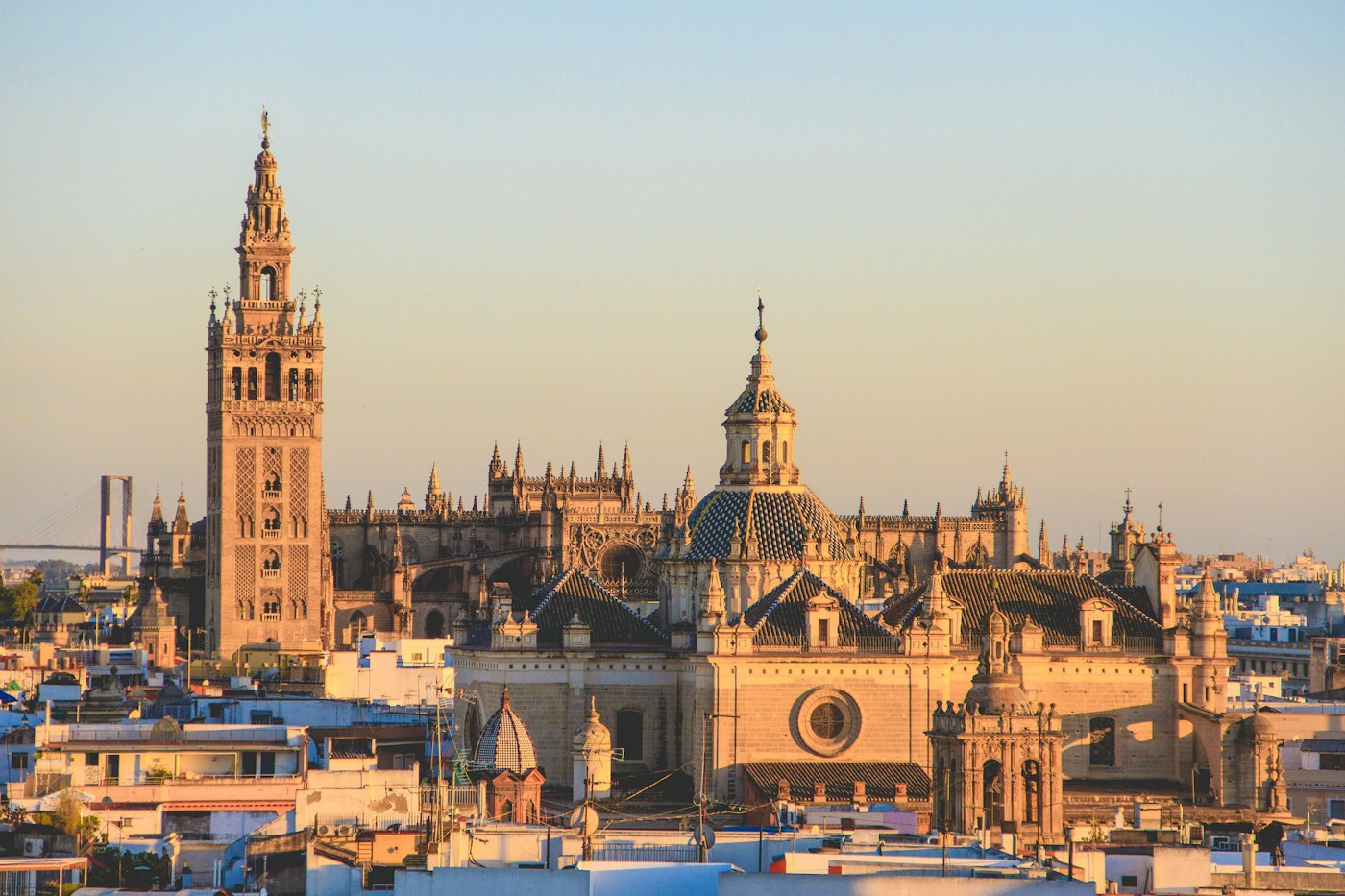
Three stages from Seville to Almadén de la Plata via Guillena and Castilblanco de los Arroyos. The first is flat, with barely 29 m of climbing; then the hills of the Sierra Norte de Sevilla begin, and the stage from Castilblanco to Almadén de la Plata adds up to 525 m of climbing in 28.2 km. See the Castilblanco › Almadén de la Plata stage.
Extremadura: 12 stages and 336.9 km
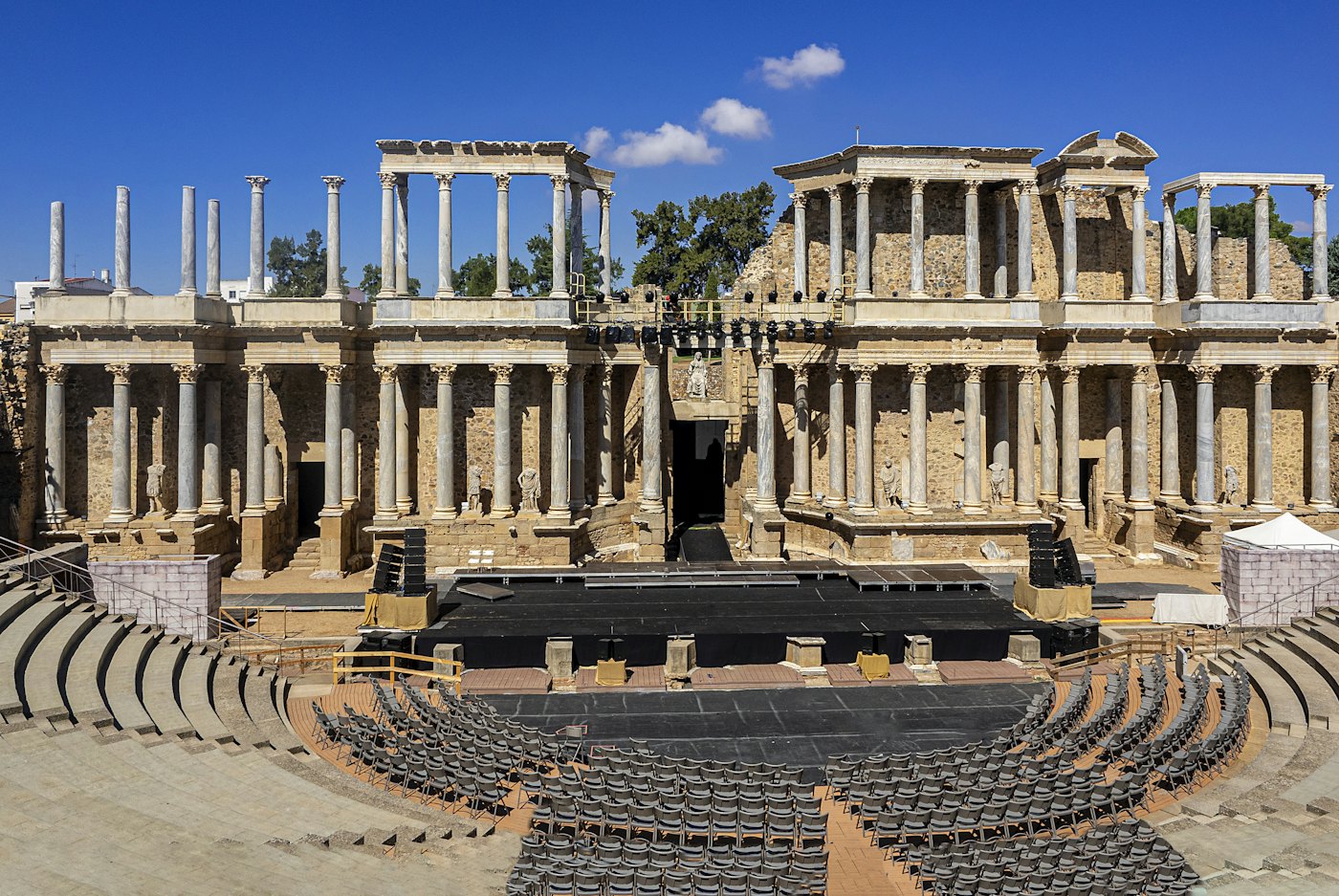
Twelve stages from Almadén de la Plata to Aldeanueva del Camino via Monesterio, Zafra, Mérida, Cáceres and Carcaboso. The first, from Almadén to Monesterio, climbs 664 m in 33.6 km, and this is the section of long stages: from Mérida to Alcuéscar it is 35.9 km, from Alcuéscar to Cáceres 37.4 km and from Carcaboso to Aldeanueva del Camino 38.3 km, with the Roman arch of Cáparra on the way. See the Carcaboso › Aldeanueva del Camino stage.
Castile and León: 8 stages and 203.3 km
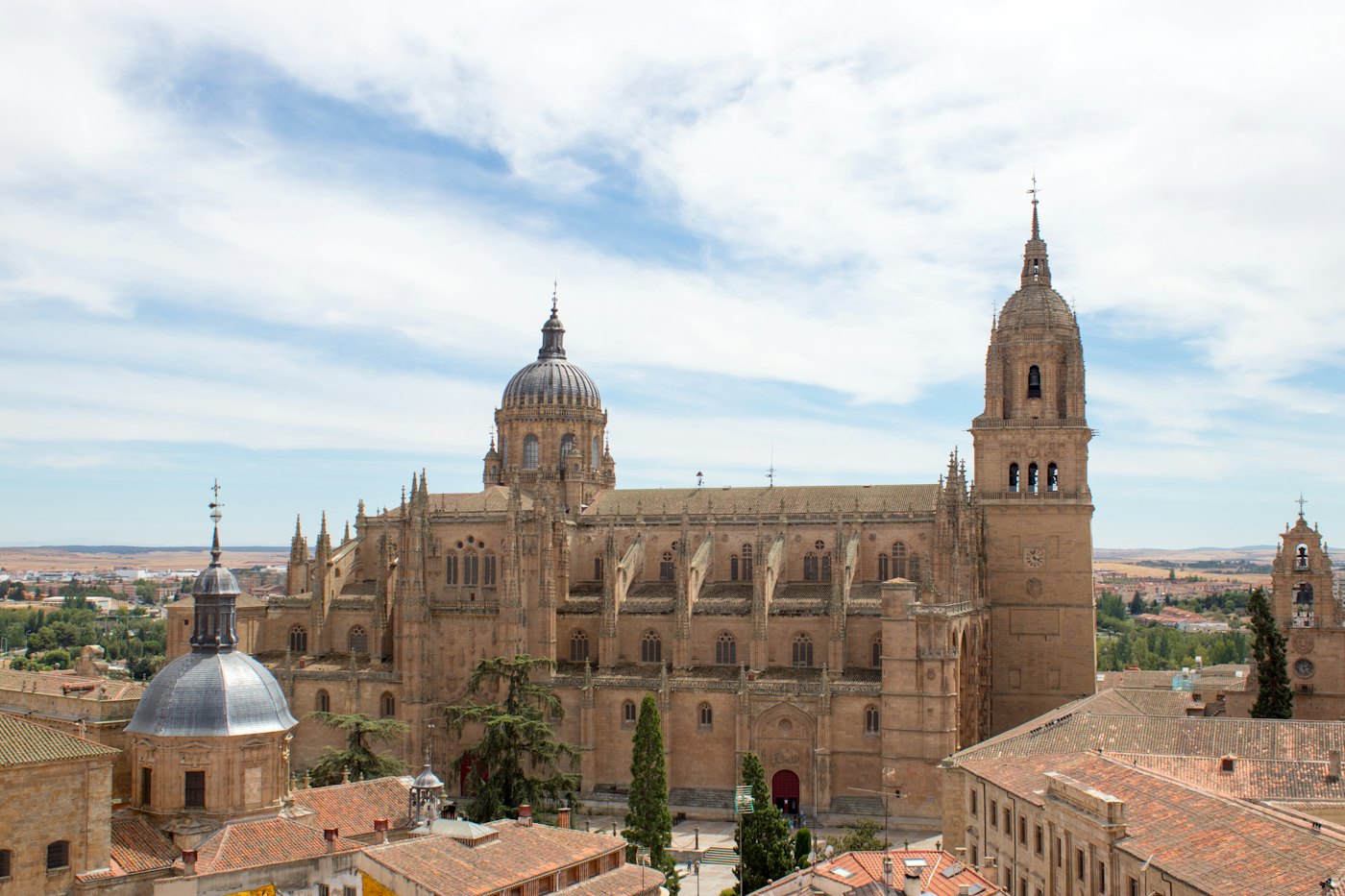
Eight stages from Aldeanueva del Camino to Granja de Moreruela via Baños de Montemayor, Fuenterroble de Salvatierra, Salamanca and Zamora. Here is the highest point of the Vía de la Plata, 1,150 m, between Fuenterroble and San Pedro de Rozados, and the 36.4 km stage from Salamanca to El Cubo del Vino. See the San Pedro de Rozados › Salamanca stage.
From Granja de Moreruela to Astorga: 4 stages and 94.3 km
Four flat stages, 94.3 km via Benavente, Alija del Infantado and La Bañeza to Astorga, where the Vía de la Plata joins the Camino Francés. It is the option for those who want to finish along the Francés; the other is to continue along the Camino Sanabrés from Granja de Moreruela. See the La Bañeza › Astorga stage.
Sanabrés or Astorga: two ways of reaching Santiago
At Granja de Moreruela, at the end of stage 23, the Vía de la Plata splits. Most pilgrims turn north-west along the Camino Sanabrés: 361.8 km via Tábara, Puebla de Sanabria, A Gudiña, Ourense and Silleda to Santiago. It is the reference route, more mountainous as it enters Galicia, with the highest point of the whole route, 1,361 m, between Puebla de Sanabria and Lubián. You have all its stages in the guide to the Camino Sanabrés.
The other option is to continue north to Astorga (94.3 km in 4 stages) and carry on along the Camino Francés: from Astorga it is 256.2 km to Santiago, via El Bierzo, O Cebreiro and Sarria. It is somewhat shorter overall and has more services, but from Sarria the Camino fills up with pilgrims.
| Route from Seville | Km to Santiago | Via |
|---|---|---|
| Along the Camino Sanabrés | 970.4 | Granja de Moreruela, Puebla de Sanabria, Ourense, Silleda |
| Via Astorga and the Camino Francés | 959.1 | Benavente, La Bañeza, Astorga, Ponferrada, Sarria |
On the Sanabrés there is also a variant via Verín and Allariz, which splits off at A Gudiña and rejoins at Ourense.
Vía de la Plata must-sees
The places worth stopping for, in the order they appear on the route.
- Seville Cathedral · Seville (stage 1). Gothic and the largest in Spain, a World Heritage Site, with the Patio de los Naranjos and the Giralda, the former minaret of the mosque.
- Church of the Divino Salvador · Calzadilla de los Barros (stage 6). 150 m from the Camino, a 15th-century church with an early 16th-century Gothic altarpiece, one of the most valuable in Extremadura.
- Palace of the Dukes of Feria · Zafra (stage 6). The 15th- to 18th-century alcázar, the collegiate church of La Candelaria, with canvases by Zurbarán, and the Plaza Grande and Plaza Chica.
- Archaeological ensemble of Mérida · Mérida (stage 9). A World Heritage Site: the Roman theatre and amphitheatre, the circus, the Temple of Diana, the bridge over the Guadiana, which you cross on foot, and the Los Milagros aqueduct.
- Monumental city of Cáceres · Cáceres (stage 11). The church of Santa María, the Toledo-Moctezuma and Veletas palaces and the Golfines houses, in a walled old town.
- Churches of Baños de Montemayor · Baños de Montemayor (stage 16). Santa Catalina, from the 15th century, and Santa María, from the 16th and 17th centuries, a Site of Cultural Interest.
- Salamanca · Salamanca (stage 19). The Roman bridge you enter by, the University, the two cathedrals, the Plaza Mayor and the Casa de las Conchas.
- Zamora Cathedral · Zamora (stage 21). From the 12th century, with its Byzantine-style dome, in an old town with more than twenty Romanesque churches.
- Santa María del Azogue and San Juan del Mercado · Benavente (stage 24). Two Romanesque churches and the Hospital de la Piedad, founded for pilgrims in the 16th century.
- Astorga Cathedral · Astorga (stage 27). Gothic, begun in 1471, with a 16th-century main altarpiece and two towers that can be seen from afar.
When to walk the Vía de la Plata
The Vía de la Plata is a spring and autumn Camino. In July and August average highs exceed 30 °C (31.1 °C in July) and in Andalusia and Extremadura the heat is very hard on long stages with little shade. May was the month with the most pilgrims in 2025, 1,573, and from April to October more than eight out of ten albergues are open. In winter about two out of three open and it can snow on the Sanabrés.
| Month | Pilgrims 2025 | Avg. high | Avg. low | Albergues open |
|---|---|---|---|---|
| January | 63 | 11.2 °C | 2.6 °C | 64 % |
| February | 73 | 13.5 °C | 3.2 °C | 67 % |
| March | 318 | 17.1 °C | 5.2 °C | 81 % |
| April | 996 | 18.5 °C | 6.8 °C | 87 % |
| May | 1,573 | 22.3 °C | 9.8 °C | 87 % |
| June | 1,296 | 27.8 °C | 13.6 °C | 87 % |
| July | 1,384 | 31.1 °C | 15.7 °C | 85 % |
| August | 1,113 | 30.9 °C | 15.6 °C | 85 % |
| September | 845 | 27.0 °C | 13.4 °C | 87 % |
| October | 850 | 20.8 °C | 9.9 °C | 85 % |
| November | 223 | 15.1 °C | 6.0 °C | 74 % |
| December | 99 | 11.8 °C | 3.8 °C | 66 % |
How to get to Seville to start the Vía de la Plata
Seville has direct trains from Madrid in about 2 h 38 min. If you walk the Vía de la Plata in sections, Mérida, Salamanca and Zamora also have direct trains from Madrid, and so does Ourense for the last section of the Sanabrés, which is also the most common starting point for getting the Compostela.
| Start | Fastest train from Madrid |
|---|---|
| Seville | 2 h 38 min |
| Mérida | 4 h 02 min |
| Salamanca | 1 h 37 min |
| Zamora | 1 h 03 min |
| Astorga | 3 h 03 min |
| Ourense | 2 h 14 min |
Where to sleep on the Vía de la Plata
Between the Vía de la Plata and the Camino Sanabrés there are 148 albergues, 68 of them public, and 98 are open all year. A dormitory bed costs €16.9 on average. On each stage you have the places to stay at the end of the day with price, beds and phone number, and in the accommodation finder you can filter them by town.
There are fewer pilgrims than on other Caminos and many albergues are small and municipal: out of season it is best to call ahead to confirm they are open and how to collect the key.
The route also preserves several religious hospitality houses steeped in history: the Casa de Misericordia of the Slaves of Mary and of the Poor in Alcuéscar, donation-based and with a shared supper, the albergue of the Convento de San Francisco in Zafra and, on the Sanabrés, the albergue next to the monastery of Oseira. We bring them together in the guide to Camino de Santiago monasteries.
What to eat on the Vía de la Plata
In Extremadura, the star product of the Camino is Torta del Casar: Casar de Cáceres, on stage 12, gives its name to this creamy sheep's cheese with Designation of Origin, made by transhumant shepherds and with its own museum. If you continue along the Camino Sanabrés, in Galicia pulpo á feira and the wines of Ourense await you.
Along the Camino Sanabrés
- In Soutelo Verde, near Laza, bica blanca, a traditional sponge cake, is baked every day.
- Ourense, with no coastline, has pulpo á feira as its star dish, a tradition dating back to the tribute paid to the monastery of Oseira, and an octopus fair on the 7th and 17th of every month; four wine designations coexist in the province: Ribeiro, Valdeorras, Ribeira Sacra and Monterrei.
- In Oseira, the monks' Eucaliptine liqueur; in Lalín, the Feira do Cocido; in Lestedo, Carnival filloas (pancakes), with a festival of tourist interest.
Tips for the Vía de la Plata
- Be ready for long stages: there are four of more than 35 km and the longest stretch without a fountain, bar or shop is 38.6 km.
- Always carry plenty of water, especially from May to September, and set off very early to avoid the hottest hours.
- Protect yourself from the sun: cap, sunscreen and light long-sleeved clothing in Andalusia and Extremadura.
- Plan your shopping: many small villages have no shop or it closes at midday.
- Decide before reaching Granja de Moreruela whether you will continue along the Sanabrés or via Astorga.
- Out of season, confirm by phone that the albergue is open.
- Download offline maps and activate the AlertCops Camino Guardian: there are long sections with no coverage and no people. We explain how in apps for the Camino de Santiago.
- Carry a somewhat more complete first-aid kit than on the Francés, with rehydration salts: there are sections of more than 35 km without services.
Credential and Compostela
The credential is the document that identifies you as a pilgrim: it gives you access to albergues and is the proof you need to request the Compostela. The official model is distributed by the Pilgrim's Office of Santiago Cathedral and is available from parishes, Friends of the Camino associations, albergues and authorised confraternities.
For the Compostela you must walk at least the last 100 km continuously to Santiago (200 km by bike), stamping your credential twice a day on that section. On the Sanabrés, the closest qualifying start is Ourense, about 104 km away; via Astorga and the Camino Francés, the usual start is Sarria. The Compostela is free and is collected in person at the Pilgrim's Office, at Rúa Carretas 33, open every day from 10:00 to 19:00 except 25 December and 1 January.
2027 is a Compostelan Holy Year because 25 July falls on a Sunday: there will be more pilgrims than usual, so it is wise to book further ahead on the last sections.
Frequently asked questions about the Vía de la Plata
How many kilometres is the Vía de la Plata?
702.9 km from Seville to Astorga in 27 stages. To Santiago it is 970.4 km via the Camino Sanabrés or 959.1 km via Astorga and the Camino Francés.
How many days does it take to walk the Vía de la Plata?
About 37 days from Seville to Santiago via the Sanabrés, at an average of about 26 km a day. With the planner you can split it across the days you have.
Which is the longest stage of the Vía de la Plata?
Carcaboso to Aldeanueva del Camino, at 38.3 km, followed by Alcuéscar to Cáceres (37.4 km) and Salamanca to El Cubo del Vino (36.4 km).
Is the Vía de la Plata hard?
The climbing is moderate, but the stages are long, there are sections without services and in summer it is very hot. With good preparation and in spring or autumn it is a very manageable Camino.
When is the best time to walk the Vía de la Plata?
April, May, September and October. In July and August the heat in Andalusia and Extremadura is very hard, and in winter fewer albergues are open.
Where should I start the Vía de la Plata for the Compostela?
You have to walk the last 100 km. On the Sanabrés, the most common start is Ourense, about 104 km from Santiago.
Which is better, the Sanabrés or continuing to Astorga?
The Sanabrés is the reference route and the quietest: 970.4 km from Seville. Via Astorga it is 959.1 km and from there you continue along the Camino Francés, with more services and more pilgrims.
How much does it cost to sleep on the Vía de la Plata?
An albergue bed costs €16.9 on average. There are 148 albergues between the Vía de la Plata and the Sanabrés, 68 of them public.
Prepare your days with the planner, which splits the Vía de la Plata to Santiago across the days you have. Continue along the Camino Sanabrés or the Camino Francés from Astorga, and to prepare your trip read the practical Camino de Santiago guides or compare other routes in all the Caminos.
All 27 stages, one by one
Each stage with its distance and difficulty. Tap a stage to see the map, the villages and where to sleep.