
Camino Sanabrés
The Camino Sanabrés is the natural continuation of the Vía de la Plata towards Santiago: it splits from it at Granja de Moreruela, in Zamora, and enters Galicia through the Sanabria mountains to reach Santiago via Ourense. It is 361.8 km in 13 stages, with some of the most beautiful and lonely landscapes of all the Caminos.
Here you have the key facts about the Camino Sanabrés, the map, the stages by section, the Verín variant, the must-sees, when to go, how to get there, where to sleep, what to eat and how to get the Compostela, which you can obtain by starting in Ourense. If you are coming from Seville, the guide to the Vía de la Plata takes you to Granja de Moreruela: from Seville to Santiago via the Sanabrés it is about 970.4 km.
- The 13 stages
- Key facts
- Stages by section
- Stage by stage
- Via Laza or via Verín
- Must-sees
- When to go
- Getting there
- Where to sleep
- What to eat
- Tips
- Credential and Compostela
- FAQ
The 13 stages of the Camino Sanabrés
The map shows the whole route and below it each stage with its start, finish and distance. Tap one to see its elevation profile, the villages along the way and where to sleep.
Tap a point to see the stage; zoom in to see the numbers. On mobile, tap the map to move it. Route: © OpenStreetMap contributors (ODbL).
Easy Moderate Hard
Camino Sanabrés essentials
| Fact | Camino Sanabrés |
|---|---|
| Route | Granja de Moreruela › Santiago de Compostela (361.8 km in 13 stages) |
| From Seville | About 970.4 km along the Vía de la Plata and the Sanabrés |
| Average per stage | 27.8 km |
| Total ascent | About 5,550 m |
| Highest point | 1,361 m, on the climb to Padornelo, between Puebla de Sanabria and Lubián |
| Albergues | 148 between the Vía de la Plata and the Sanabrés (68 public) |
| Albergue bed | €16.9 on average |
| Minimum for the Compostela | Ourense, about 104 km from Santiago |
| Backpack transfer with Correos | From Ourense, March to October |
The stages of the Camino Sanabrés by section
The Sanabrés starts flat, through the fields of Zamora, becomes mountainous as it crosses the Sanabria and A Canda ranges, and in Galicia alternates valleys, oak woods and stone hamlets all the way to Santiago. Several stages exceed 30 km, so it is worth planning carefully where to sleep.
| Section | From › to | Stages | Km | Ascent (m) |
|---|---|---|---|---|
| Zamora | Granja de Moreruela › Puebla de Sanabria | 1–4 | 115.8 | 990 |
| Sanabria and the entry into Galicia | Puebla de Sanabria › Laza | 5–7 | 85.8 | 1,580 |
| Ourense | Laza › Cea | 8–10 | 76.0 | 1,450 |
| From Cea to Santiago | Cea › Santiago de Compostela | 11–13 | 83.1 | 1,530 |
Zamora: 4 stages and 115.8 km
Four stages and 115.8 km from Granja de Moreruela to Puebla de Sanabria, via Tábara, Santa Marta de Tera and Mombuey. The stages are flat but long, two of them over 30 km, among cereal fields and the first oak woods. See the Santa Marta de Tera › Mombuey stage.
Sanabria and the entry into Galicia: 3 stages and 85.8 km
Three stages and 85.8 km from Puebla de Sanabria to Laza. This is the mountain section: you climb to Padornelo, the highest point of the Camino at 1,361 m; after Lubián you enter Galicia over the A Canda pass and, beyond A Gudiña, you continue across A Serra Seca, a lonely section with few services. See the Puebla de Sanabria › Lubián stage.
Ourense: 3 stages and 76.0 km
Three stages and 76.0 km from Laza to Cea, via Xunqueira de Ambía and Ourense, the city of hot springs, from where it is about 104 km to Santiago. See the Xunqueira de Ambía › Ourense stage.
From Cea to Santiago: 3 stages and 83.1 km
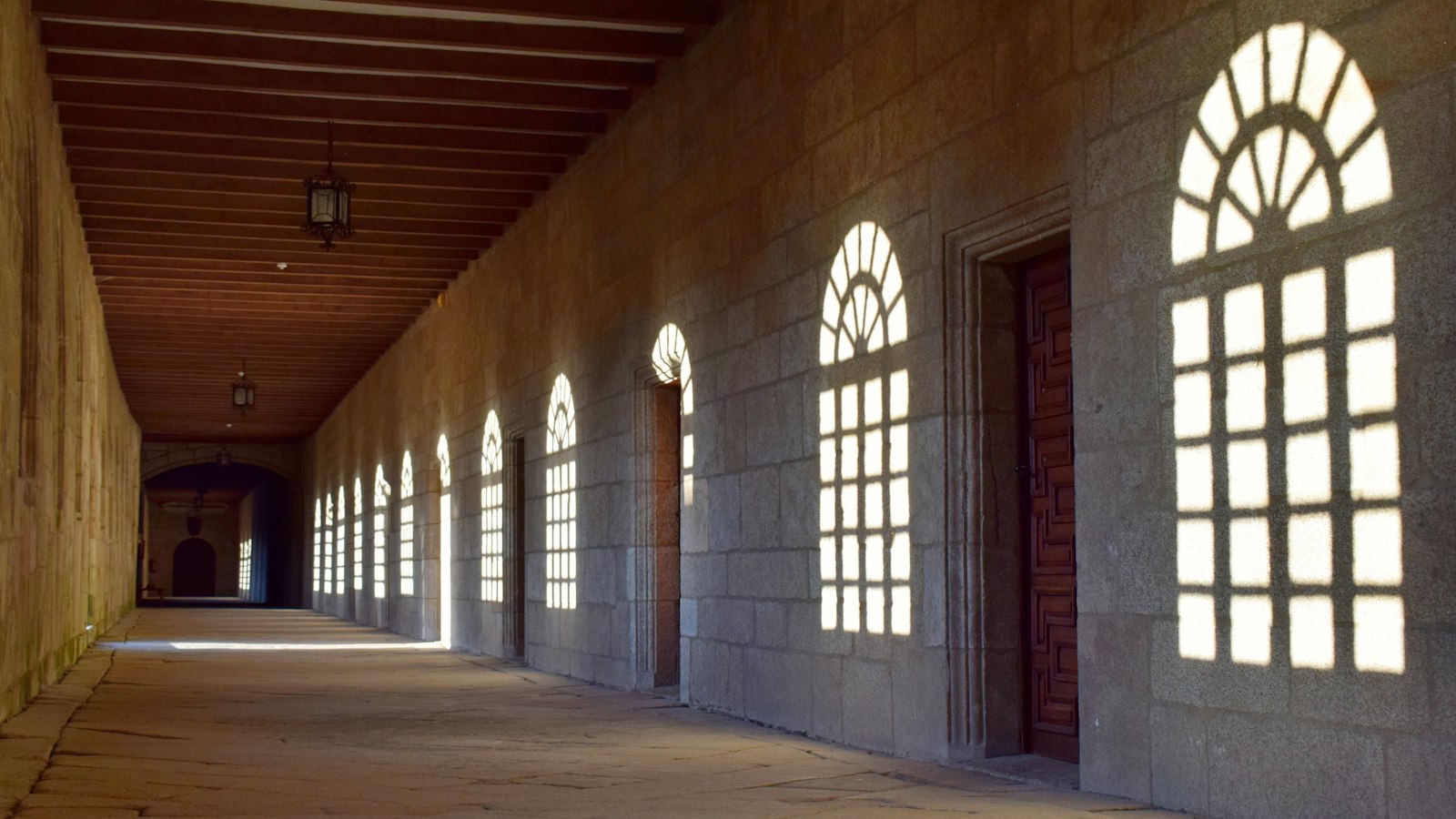
Three stages and 83.1 km via the monastery of Oseira, Lalín, Silleda and Ponte Ulla to Santiago. The last one, 40.6 km long, is usually split in two by sleeping in Ponte Ulla or Outeiro. See the Cea › Castro Dozón stage.
The Camino Sanabrés stage by stage
A summary of each stage of the Camino Sanabrés: distance, climbing, villages along the way and where there is accommodation. On each stage page you have the map, the profile and all the services.
Stage 1: Granja de Moreruela › Tábara. 25.1 km and about 210 m of climbing; moderate difficulty. It passes through Faramontanos de Tábara. Before the end there is accommodation in Faramontanos de Tábara (3), if you want to shorten it. See the stage.
Stage 2: Tábara › Santa Marta de Tera. 22.9 km and about 210 m of climbing; moderate difficulty. It passes through Bercianos de Valverde and Santa Croya de Tera. Before the end there is accommodation in Santa Croya de Tera (1), if you want to shorten it. See the stage.
Stage 3: Santa Marta de Tera › Mombuey. 36.1 km and about 260 m of climbing; demanding difficulty. It passes through Calzadilla de Tera, Olleros de Tera, Villar de Farfón and Rionegro del Puente. Before the end there is accommodation in Calzadilla de Tera (2), Olleros de Tera (2), Villar de Farfón (1) and Rionegro del Puente (2), if you want to shorten it. See the stage.
Stage 4: Mombuey › Puebla de Sanabria. 31.7 km and about 310 m of climbing; demanding difficulty. It passes through Valdemerilla, Cernadilla, San Salvador de Palazuelo, Entrepeñas, Asturianos and Palacios de Sanabria. Before the end there is accommodation in Cernadilla (1), San Salvador de Palazuelo (1), Entrepeñas (1) and Asturianos (1), if you want to shorten it. See the stage.
Stage 5: Puebla de Sanabria › Lubián. 28.1 km and about 550 m of climbing; moderate difficulty. It passes through Terroso, Requejo, Padornelo and Aciberos. Before the end there is accommodation in Requejo (4) and Padornelo (1), if you want to shorten it. See the stage.
Stage 6: Lubián › A Gudiña. 23.7 km and about 560 m of climbing; moderate difficulty. It passes through A Canda, Vilavella, O Pereiro and O Cañizo. See the stage.
Stage 7: A Gudiña › Laza. 34 km and about 470 m of climbing; demanding difficulty. It passes through Campobecerros, Portocamba and As Eiras. Before the end there is accommodation in Campobecerros (2) and As Eiras (2), if you want to shorten it. See the stage.
Stage 8: Laza › Xunqueira de Ambía. 33 km and about 690 m of climbing; demanding difficulty. It passes through Soutelo Verde, Tamicelas, Vilar de Barrio, Vilar de Gomareite, Bobadela and Cima de Vila. Before the end there is accommodation in Vilar de Barrio (2), if you want to shorten it. See the stage.
Stage 9: Xunqueira de Ambía › Ourense. 21.8 km and about 150 m of climbing; moderate difficulty. It passes through A Pousa, Salgueiros, Penelas, Pereiras, A Castellana and Reboredo. Before the end there is accommodation in Reboredo (2), if you want to shorten it. See the stage.
Stage 10: Ourense › Cea. 21.2 km and about 610 m of climbing; moderate difficulty. It passes through Castro de Beiro, Reguengo and Mandrás. See the stage.
Stage 11: Cea › Castro Dozón. 14.5 km and about 390 m of climbing; moderate difficulty. It passes through Cotelas, Piñor, Arenteiro and Carballeda. Before the end there is accommodation in Piñor (1) and Arenteiro (1), if you want to shorten it. See the stage.
Stage 12: Castro Dozón › Silleda. 28 km and about 440 m of climbing; moderate difficulty. It passes through Puxallos, A Xesta, Botos, Donsión, A Laxe and Trasfontao. Before the end there is accommodation in Botos (1), A Laxe (1) and Trasfontao (2), if you want to shorten it. See the stage.
Stage 13: Silleda › Santiago de Compostela. 40.6 km and about 700 m of climbing; demanding difficulty. It passes through Bandeira, Dornelas, San Miguel de Castro, Ponte Ulla, Outeiro and Lestedo. Before the end there is accommodation in Bandeira (3), Dornelas (1), San Miguel de Castro (2) and Ponte Ulla (3), if you want to shorten it. See the stage.
Via Laza or via Verín
At A Gudiña, in its small main square, the Camino Sanabrés splits. On foot most people go via Laza: 88.8 km to Ourense across A Serra Seca, more mountainous and lonely. The other option goes via Verín and Allariz, alongside the N-525: 119.2 km to Ourense, longer but with more services and two towns steeped in history, with Monterrei castle above Verín.
| Variant | Km from A Gudiña to Ourense | Via |
|---|---|---|
| Via Laza | 88.8 | A Serra Seca, Laza, Xunqueira de Ambía |
| Via Verín | 119.2 | Verín, Xinzo de Limia, Allariz |
Camino Sanabrés must-sees
The places worth stopping for, in the order they appear on the route.
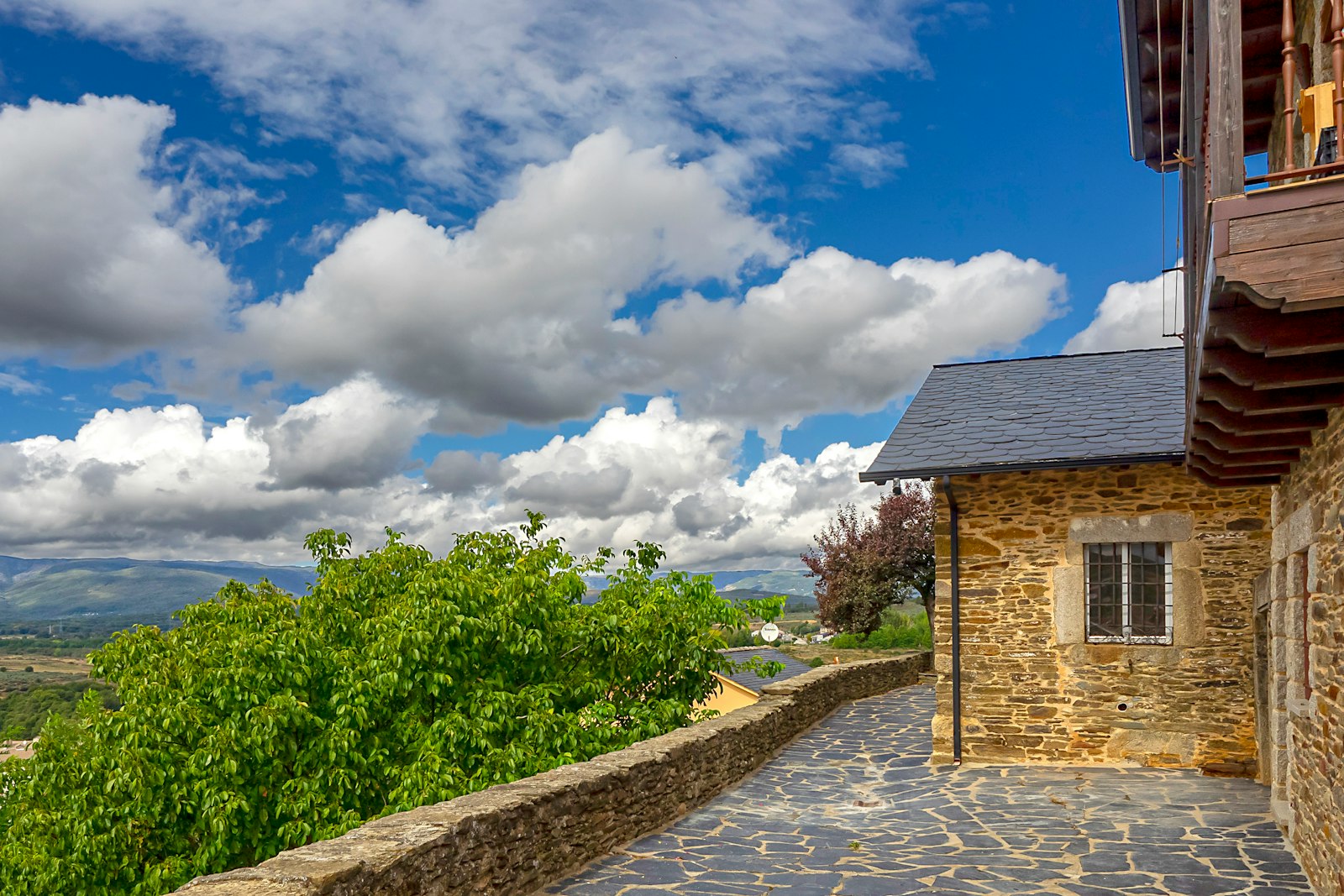
- Church of Santa María · Tábara (stage 1). What remains of the 9th-century monastery of San Salvador, where the Beatus of Tábara was illuminated in the 10th century; there is an interpretation centre on the Beatus manuscripts.
- Church of Santa Marta · Santa Marta de Tera (stage 2). Romanesque, from the mid-11th century, with what is considered the oldest depiction of Saint James as a pilgrim.
- Castle and old town · Puebla de Sanabria (stage 4). A medieval old town listed as a Historic-Artistic Ensemble, with coats of arms on its houses and the 15th-century castle of the Counts of Benavente.
- Collegiate church of Santa María la Real · Xunqueira de Ambía (stage 8). Born from a 10th-century monastery: a 12th-century Romanesque church, a 16th-century cloister and an 18th-century organ.
- Cathedral and As Burgas · Ourense (stage 9). The Romanesque cathedral of San Martiño, and the hot springs of As Burgas and along the Miño, some with free bathing.
- Monastery of Oseira · Oseira (stage 11). The «Galician Escorial», a huge Cistercian monastery from the 12th and 13th centuries, with a community of monks and guided tours.
- Church of Lalín de Arriba · Lalín (stage 12). Romanesque in origin and part of a former monastery, 50 m from the Camino.
When to walk the Camino Sanabrés
Spring and autumn are the best seasons: from April to October more than eight out of ten albergues on the Vía de la Plata and the Sanabrés are open. In summer the heat bites on the Zamora sections, and in winter the Padornelo and A Canda passes, over 1,200 m, can have snow and ice. Between the Vía de la Plata and the Sanabrés, 8,833 pilgrims reached Santiago in 2025, with May the busiest month.
How to get to the Camino Sanabrés
To start at Granja de Moreruela, the most practical option is to take the train to Zamora, 1 h 03 min from Madrid, and from there a bus or taxi. To walk only the end and get the Compostela, Ourense has direct trains from Madrid in about 2 h 14 min.
| Start | From Madrid |
|---|---|
| Zamora, for Granja de Moreruela | Direct train, 1 h 03 min |
| Ourense | Direct train, 2 h 14 min |
Where to sleep on the Camino Sanabrés
Between the Vía de la Plata and the Sanabrés there are 148 albergues, 68 of them public, and a dormitory bed costs €16.9 on average. On each stage you have the places to stay with price, beds and phone number, and in the accommodation finder you can filter them by town.
Some small albergues work with a key: in Laza, for example, you have to register and collect it from Civil Protection, next to the town hall. Out of season, call ahead.
What to eat on the Camino Sanabrés
The Sanabrés enters inland Galicia, and you notice it at the table: pulpo á feira, Cea bread, cocido in Lalín and wines from four designations of origin in the province of Ourense.
- In Soutelo Verde, near Laza, bica blanca, a traditional sponge cake, is baked every day.
- Ourense, with no coastline, has pulpo á feira as its star dish, a tradition dating back to the tribute paid to the monastery of Oseira, and an octopus fair on the 7th and 17th of every month; four wine designations coexist in the province: Ribeiro, Valdeorras, Ribeira Sacra and Monterrei.
- In Oseira, the monks' Eucaliptine liqueur; in Lalín, the Feira do Cocido; in Lestedo, Carnival filloas (pancakes), with a festival of tourist interest.
- Cea is famous for its bread, made by hand since the 13th century and with its own geographical indication.
Tips for the Camino Sanabrés
- Check the forecast before the mountain stages between Puebla de Sanabria and A Gudiña, especially in winter.
- Carry water and some food across A Serra Seca, between A Gudiña and Laza: there are few services.
- Split the last stage at Ponte Ulla or Outeiro if you do not want to do 40 km in one go.
- Decide in A Gudiña whether you are going via Laza or Verín; the arrows split in the square.
- There are few pilgrims outside summer: it is a quiet Camino, but it is worth letting the albergues that work with a key know you are coming.
Credential and Compostela
The credential gives access to the albergues and is the proof you need to request the Compostela; you can get it at parishes, Friends of the Camino associations, albergues and authorised confraternities.
For the Compostela you must walk at least the last 100 km continuously to Santiago, stamping your credential twice a day. On the Sanabrés, Ourense is about 104 km away, so it is the usual starting point for those with only five or six days. The Compostela is collected free of charge at the Pilgrim's Office, at Rúa Carretas 33.
Frequently asked questions about the Camino Sanabrés
How many kilometres is the Camino Sanabrés?
361.8 km from Granja de Moreruela to Santiago, in 13 stages. From Seville, adding the Vía de la Plata, it is about 970.4 km.
Where does the Camino Sanabrés start?
At Granja de Moreruela (Zamora), where it splits from the Vía de la Plata, which continues towards Astorga.
Can you walk the Camino Sanabrés from Ourense?
Yes, and it is the most common option for getting the Compostela with few days: from Ourense it is about 104 km to Santiago.
Is the Camino Sanabrés hard?
It has long stages and a mountain section in Sanabria, with the highest point at 1,361 m, but the rest is manageable. It adds up to about 5,550 m of climbing.
Which is better, via Laza or via Verín?
Via Laza is shorter (88.8 km from A Gudiña to Ourense) and lonelier; via Verín it is 119.2 km, with more services and towns such as Verín and Allariz.
How many days does it take to walk the Camino Sanabrés?
About 13 or 14 days from Granja de Moreruela. With the planner you can split it across the days you have.
Prepare your days with the planner. If you start in Seville, follow the guide to the Vía de la Plata to Granja de Moreruela; to prepare your trip, read the practical Camino de Santiago guides or compare routes in all the Caminos.
All 13 stages, one by one
Each stage with its distance and difficulty. Tap a stage to see the map, the villages and where to sleep.