
Camino del Norte (Northern Way)
The Camino del Norte (Northern Way) runs from Irún to Santiago de Compostela along the Cantabrian coast: 820.9 km in 33 stages through the Basque Country, Cantabria, Asturias and Galicia, passing San Sebastián, Bilbao, Santander and Gijón. In 2025, 21,481 pilgrims reached Santiago on this route.
This Camino del Norte guide has the key facts, the route map, the stages by section, the variants, the ten places you shouldn’t miss, when to go month by month, how to get to the start, where to sleep, what to eat and how to get the credential and the Compostela. Further down you’ll find all 33 stages, one by one, with their elevation profile and accommodation.
- The 33 stages
- Key facts
- Stages by section
- Variants
- 10 must-sees
- When to go
- Getting there
- Where to sleep
- What to eat
- Credential and Compostela
- FAQ
The 33 stages of the Camino del Norte
The map shows the whole route and below it each stage with its start, finish and distance. Tap one to see its elevation profile, the villages along the way and where to sleep.
Tap a point to see the stage; zoom in to see the numbers. On mobile, tap the map to move it. Route: © OpenStreetMap contributors (ODbL).
Easy Moderate Hard
Camino del Norte: key facts
| Fact | Camino del Norte |
|---|---|
| Route | Irún › Santiago de Compostela |
| Distance | 820.9 km |
| Stages | 33 (average 24.9 km) |
| Total ascent | About 13,484 m |
| Highest point | 711 m |
| Albergues | 212 (53 public); 84 open all year |
| Albergue bed | €19.10 on average; about €630 for the 33 stages |
| Asphalt or paved | 68% of the route |
| Longest section without a fountain, bar or shop | 20 km |
| Minimum for the Compostela | The last 100 km; from Baamonde there are 101 km left |
| Backpack transfer with Correos | From Irún, March to October |
| Pilgrims in 2025 | 21,481 |
The stages of the Camino del Norte by section
The Camino del Norte crosses four regions, hugging the Cantabrian Sea for much of the way: the ups and downs of the Basque Country, the beaches and estuaries of Cantabria, the Asturian coast and, from Ribadeo, inland Galicia until it joins the Camino Francés at Arzúa.
| Section | From › to | Stages | Km | Ascent (m) |
|---|---|---|---|---|
| Basque Country | Irún › Portugalete | 1–8 | 166.5 | 4,294 |
| Cantabria | Portugalete › Unquera | 9–15 | 191.3 | 3,870 |
| Asturias | Unquera › La Caridad | 16–24 | 248.9 | 2,944 |
| Galicia | La Caridad › Santiago de Compostela | 25–33 | 214.2 | 2,376 |
Basque Country: 8 stages and 166.5 km
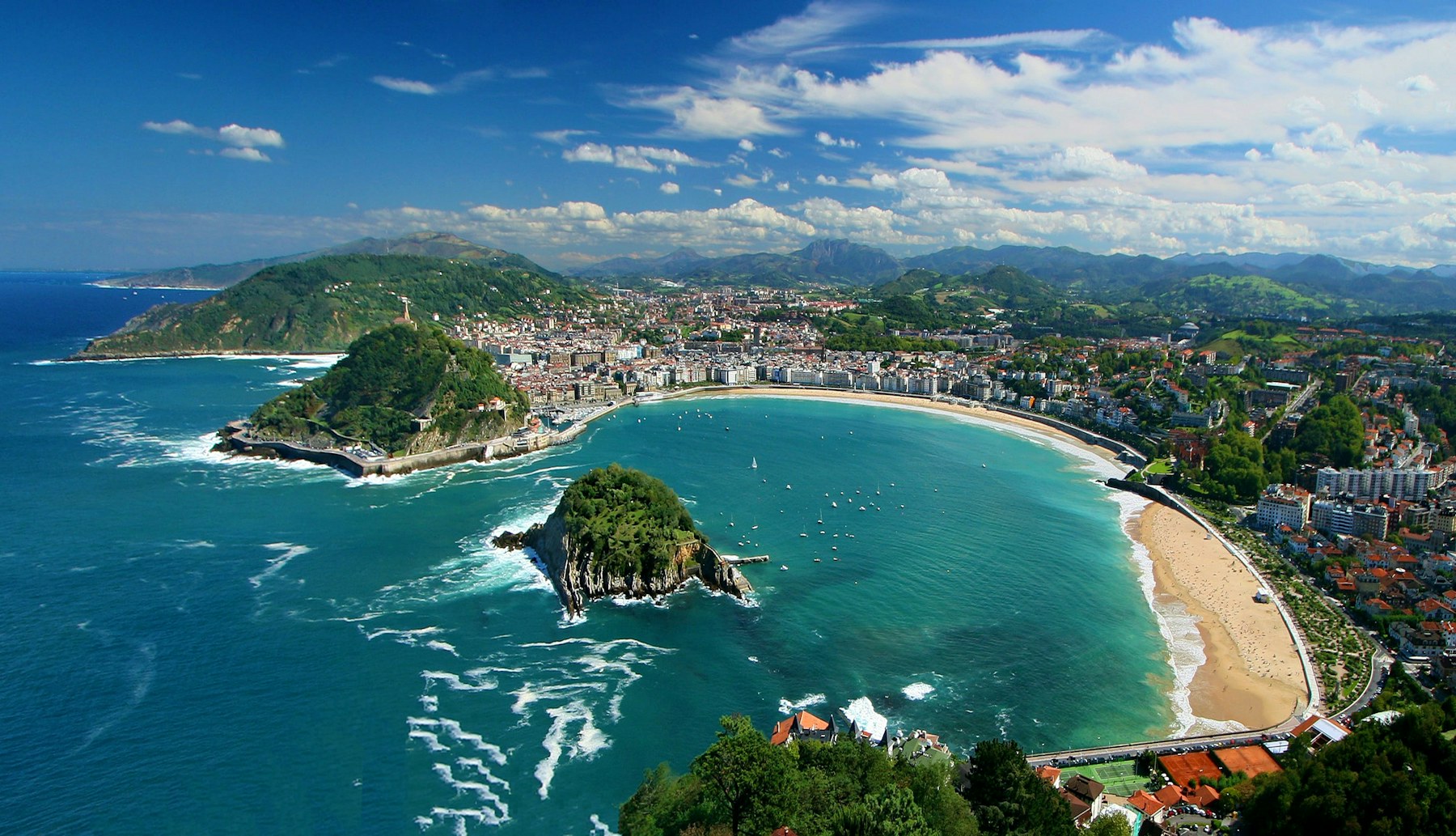
Eight stages from Irún to Portugalete via San Sebastián, Zarautz, Deba, Markina-Xemein, Gernika and Bilbao. It is the section with the most climbing per kilometre: the stage from Zarautz to Deba adds up to 772 m of ascent in 21 km, the most on the whole route. See the Zarautz › Deba stage.
Cantabria: 7 stages and 191.3 km
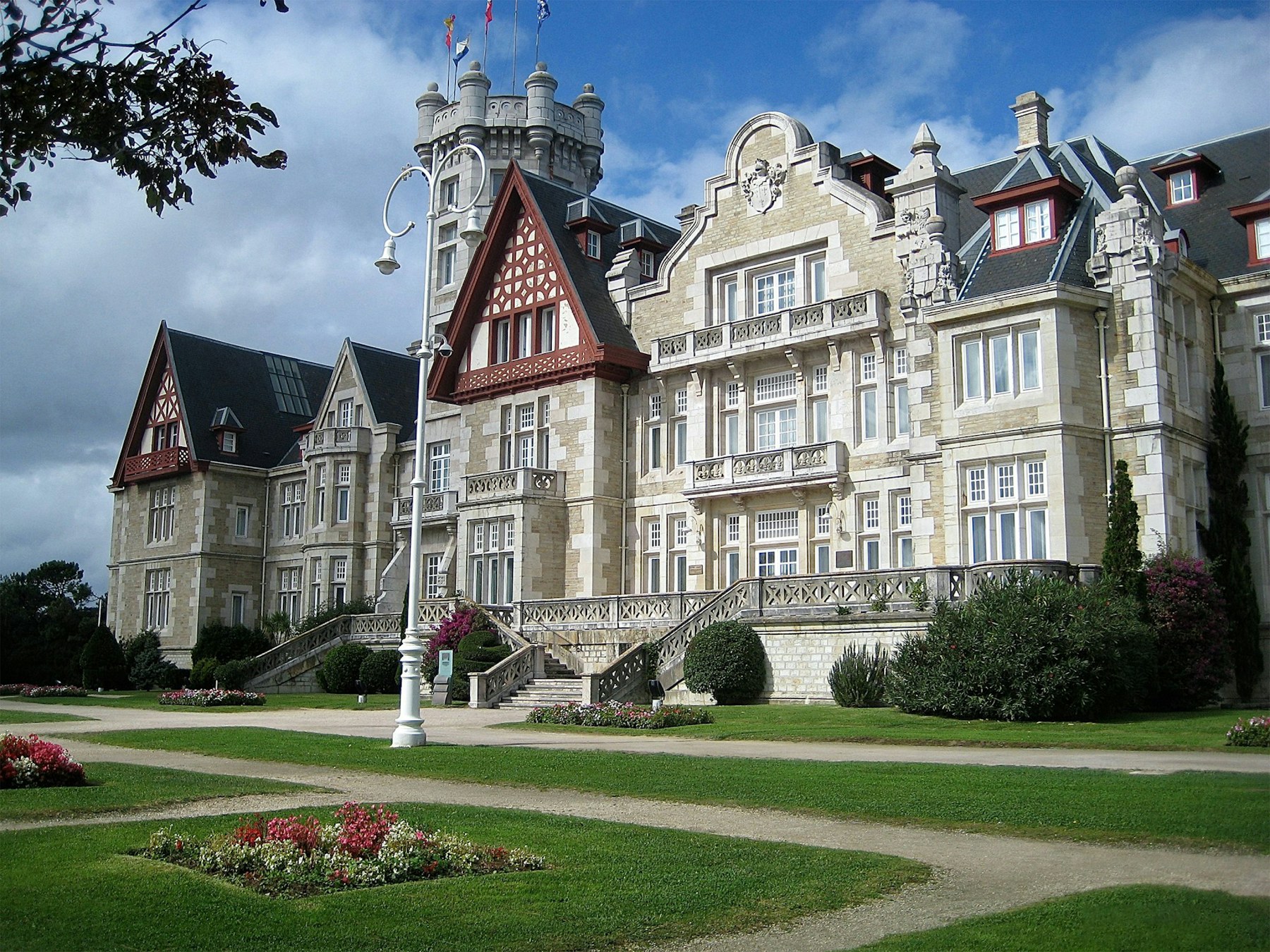
From Portugalete to Unquera via Castro Urdiales, Laredo, Güemes, Santander, Santillana del Mar and Comillas. Some of the longest days are here: from Santander to Santillana del Mar it is 36.3 km, and from Portugalete to Castro Urdiales, 32.1 km. See the Santander › Santillana del Mar stage.
Asturias: 9 stages and 248.9 km
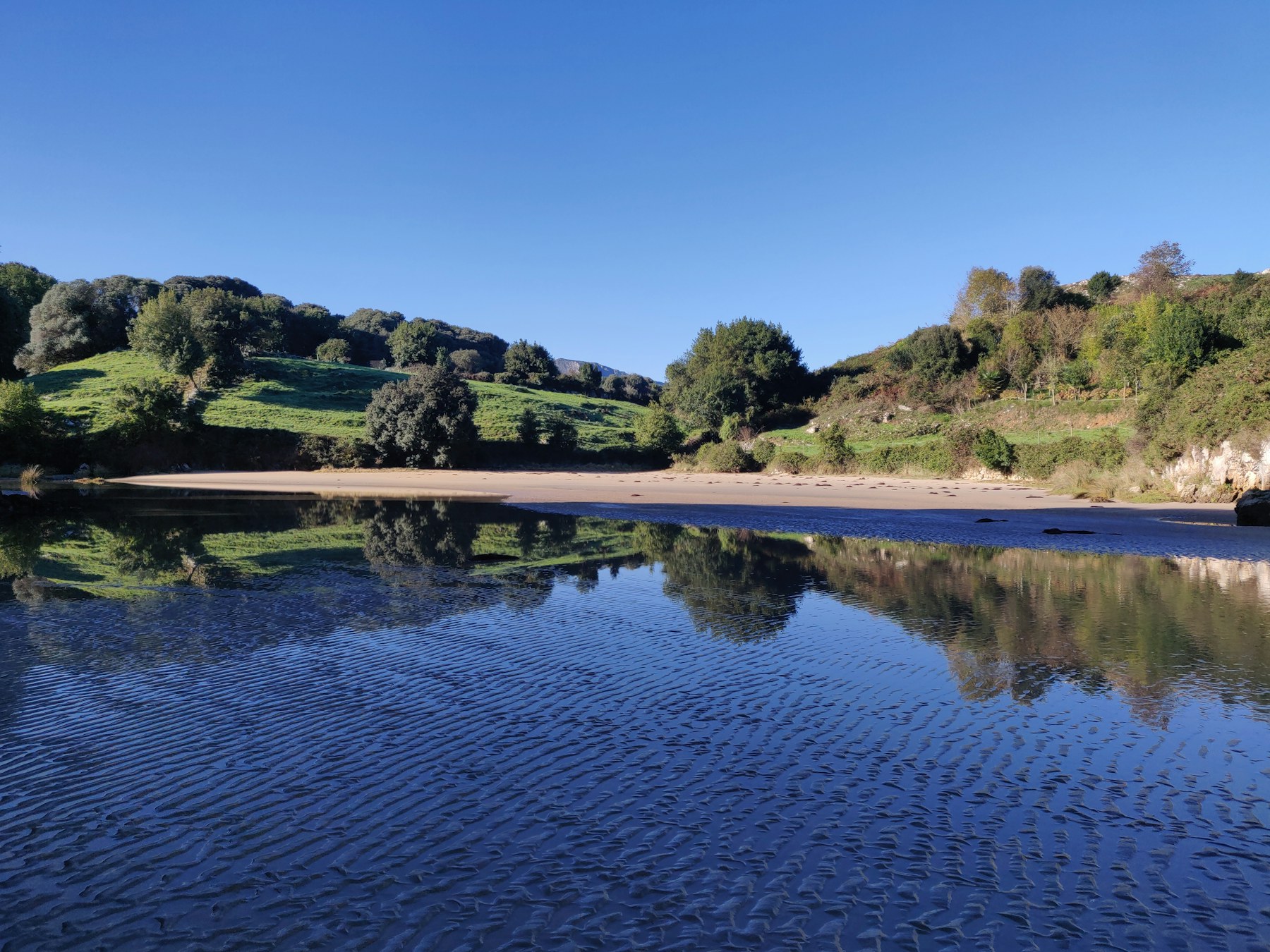
Nine stages from Unquera to La Caridad via Llanes, Ribadesella, Gijón, Avilés, Soto de Luiña and Luarca. The longest of the section is Avilés to Soto de Luiña, at 36.5 km. See the Avilés › Soto de Luiña stage.
Galicia: 9 stages and 214.2 km
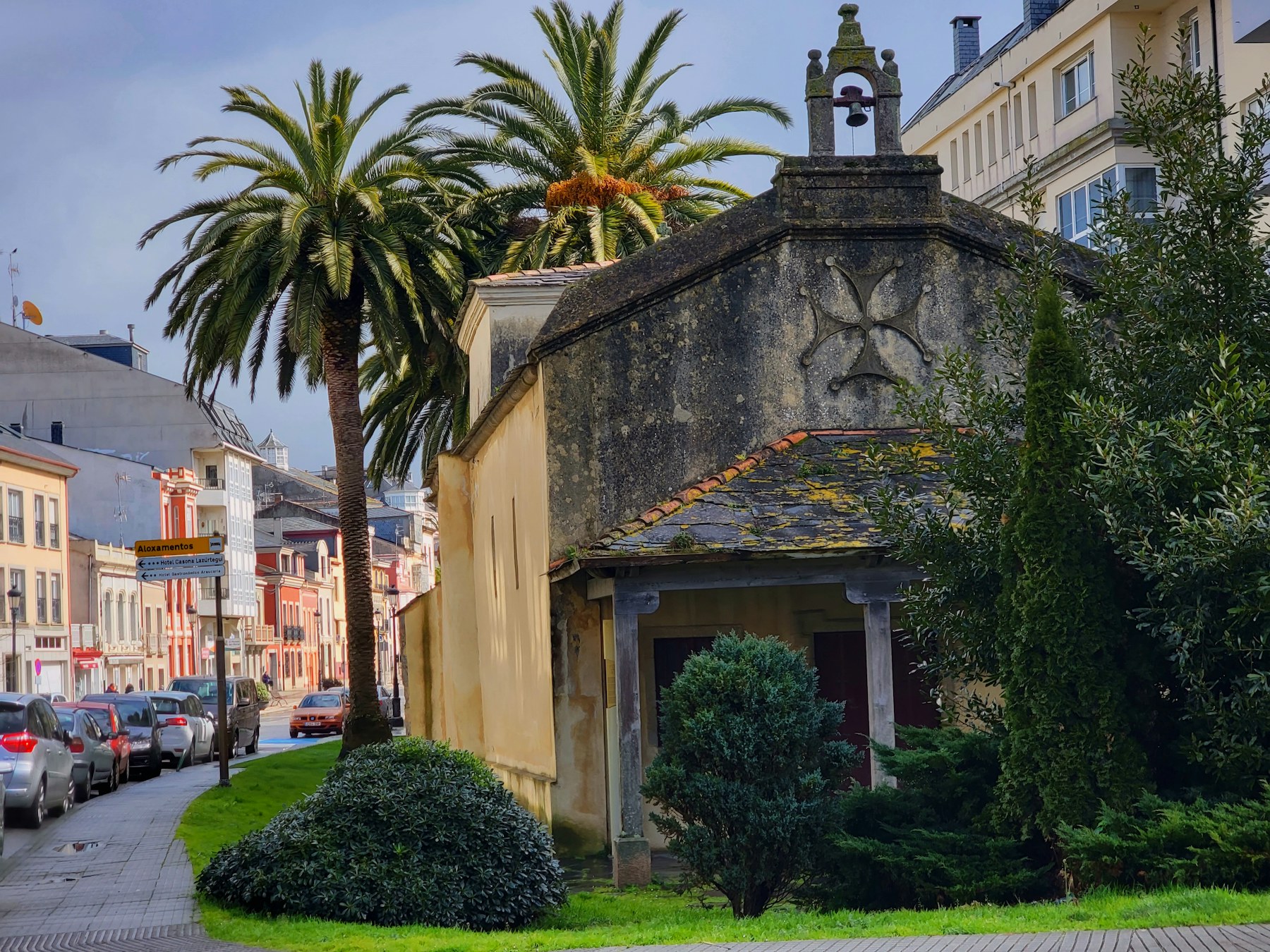
From Ribadeo the route leaves the coast and heads inland via Lourenzá, Abadín, Vilalba, Baamonde and Sobrado dos Monxes to Arzúa, where it joins the Camino Francés. The stage from Baamonde to Sobrado dos Monxes is the longest of the whole route, at 39.8 km; from Baamonde there are 101 km left to Santiago. See the Baamonde › Sobrado dos Monxes stage.
Variants of the Camino del Norte
- Bilbao along the estuary: between Bilbao and Portugalete, a 13 km alternative beside the Nervión estuary.
- Via Oviedo: from Villaviciosa you can walk to Pola de Siero and Oviedo, where it links with the Camino Primitivo, and rejoin the Camino del Norte at Avilés: three stages and 72.3 km.
- Via Tapia de Casariego: between La Caridad and Ribadeo, 22.4 km along the coast.
- Historic Camino via Vegadeo: from La Caridad to Mondoñedo via Vegadeo and Trabada, in three stages and 63.9 km.
- Via As Cruces: between Baamonde and Sobrado dos Monxes, 32 km instead of the 39.8 km of the main route.
10 must-sees on the Camino del Norte
Ten places worth stopping for, in the order they appear on the route.
- Santa María del Coro and La Concha · San Sebastián (stage 1). La Concha beach, with the town hall on the bay, Ondarreta beach up to Eduardo Chillida's Peine del Viento (1977), at the foot of Mount Igueldo, and the Baroque basilica of Santa María del Coro.
- Santa María la Real · Deba (stage 3). A Gothic church from the 14th to 17th centuries and a National Monument, with a cloister and a polychrome doorway under the portico, the work of Juan de Acha.
- Cathedral of Santiago · Bilbao (stage 7). In the Casco Viejo or Siete Calles: the Gothic cathedral of Santiago, the only one in Spain dedicated to the apostle apart from Compostela's, and the church of San Antón by its bridge.
- Santa María de la Asunción · Castro Urdiales (stage 9). A Gothic church from the 13th to 15th centuries in the Puebla Vieja; beside it, the Santa Ana castle-lighthouse and the Santa Ana hermitage on a rock, joined by a bridge.
- Santander Cathedral · Santander (stage 12). Two churches built one on top of the other between the 12th and 15th centuries, the lower one, of the Santísimo Cristo, Romanesque; it was rebuilt after the great fire of 1941.
- Collegiate church and Altamira cave · Santillana del Mar (stage 13). The 12th-century Romanesque collegiate church of Santa Juliana, with a cloister of 42 capitals; about 2 km away, off the Camino, the Altamira cave, the Sistine Chapel of cave art.
- Torreón de Llanes · Llanes (stage 16). The Gothic basilica of Santa María del Conceyu, with Saint James and several pilgrims on a doorway, and the 13th-century cylindrical Torreón, now the tourist office.
- Tito Bustillo cave · Ribadesella (stage 17). The Romanesque church of Santa María de Junco, the hermitage of the Virgen de la Guía and, across the bridge, the Tito Bustillo cave.
- Church of Santa María · Sebrayo (stage 18). A tiny hamlet with no regular services, with its church and one of the historic albergues of the Camino del Norte, public and simple.
- Santa María and the Casa Rectoral · Soto de Luiña (stage 21). A Baroque church from the early 18th century, with side porticoes and a square tower; next to it, the Casa Rectoral, built as a pilgrim hospital and now a cultural centre.
When to walk the Camino del Norte
From May to September more than eight out of ten albergues on the Camino del Norte are open and average highs range from 18.9 °C in May to 24.2 °C in August: it is a cool route even in summer. In winter few are open: 81 of 212 in December and January, fewer than four in ten. July and August were the months with the most pilgrims in 2025, with 3,948 and 3,976; from December to February about a hundred a month or fewer arrived.
| Month | Pilgrims 2025 | Avg. high | Avg. low | Albergues open |
|---|---|---|---|---|
| January | 59 | 12.6 °C | 4.9 °C | 38 % |
| February | 73 | 13.2 °C | 4.8 °C | 43 % |
| March | 256 | 15.3 °C | 6.1 °C | 56 % |
| April | 1,228 | 16.1 °C | 7.2 °C | 79 % |
| May | 2,483 | 18.9 °C | 10.0 °C | 83 % |
| June | 3,431 | 21.5 °C | 12.8 °C | 84 % |
| July | 3,948 | 23.5 °C | 14.8 °C | 84 % |
| August | 3,976 | 24.2 °C | 15.1 °C | 83 % |
| September | 3,074 | 22.7 °C | 13.3 °C | 84 % |
| October | 2,380 | 19.5 °C | 10.8 °C | 71 % |
| November | 473 | 15.3 °C | 7.7 °C | 49 % |
| December | 100 | 13.0 °C | 5.7 °C | 38 % |
How to get to the Camino del Norte from Madrid
The time shown is for the fastest train from Madrid to each starting point on the Camino del Norte. As well as Irún, you can start in any of these cities on the route if you have fewer days; Bayonne, in France, is two stages before Irún: Bayonne – Saint-Jean-de-Luz and Saint-Jean-de-Luz – Irún, each with its own page.
| Start | Fastest train | How |
|---|---|---|
| Bayonne | 5 h 42 min | Train to Irún and from Irún/Hendaye the French regional train to Bayonne. |
| Irún | 5 h 42 min | Direct train. |
| San Sebastián | 5 h 04 min | Direct train. |
| Bilbao | 5 h 10 min | Direct train (Abando). |
| Santander | 4 h 04 min | Direct train. |
| Gijón | 3 h 41 min | Direct train. |
Where to sleep on the Camino del Norte
The Camino del Norte has 212 albergues, 53 of them public, and 84 are open all year. A dormitory bed costs €19.10 on average, so sleeping in albergues for the 33 stages comes to about €630. Each stage lists the accommodation at the end of the day with price, beds and phone number, and in the accommodation finder you can filter them by town.
There are fewer albergues than on the Camino Francés and many close in winter, so out of season it is best to call before you arrive.
What to eat on the Camino del Norte
The food on the Camino del Norte changes with each region: fish and pintxos in the Basque Country, anchovies and cheeses in Cantabria, fabes and cider in Asturias, and octopus and Galician cheeses at the end. Pola de Siero and Oviedo are on the Oviedo variant.
Basque Country
- Fish and seafood rule the menus in Irún, also in soups and stews.
- San Sebastián is a fine-dining destination, with several three-Michelin-star restaurants.
- Getaria is the town of txakoli, a white wine with designation of origin: the route passes steep vineyards and there are wineries you can visit.
- Near Olatz, award-winning Latxa sheep's cheeses and homemade cakes at the tavern on the route.
- In Markina-Xemein, cocotes, aniseed sponge cakes.
- Around Gernika, local produce: pinto beans and Gernika peppers, which are not hot.
- In Lezama there are wineries offering visits and tastings.
- Bilbao is the great tour of Basque cooking: bacalao al pilpil, kokotxas in green sauce, angulas a la bilbaína, marmitako; for dessert, carolinas (puff pastry with a meringue cone), pasteles de arroz and canutillos.
- In Portugalete, cod, baby squid and chuletón steak; next door, in Santurtzi, the famous sardines.
Cantabria
- Anchovies in Laredo and, of course, in Santoña, where marmita de bonito is cooked; Laredo also has the Caprichos del Emperador, made with chocolate and praline.
- Santander is a good place to buy Cantabrian cheeses: quesucos de Liébana, queso nata de Cantabria or Picón Bejes-Tresviso.
- Santillana del Mar has quesadas and its tableta, a homemade lemon sponge cake.
- In Cóbreces, Trapa cheese from the Cistercians of Viaceli.
- In Comillas and San Vicente de la Barquera, sorropotún de bonito, mackerel, sea urchins and oysters from the estuary; in Unquera, corbatas, puff pastries with almond.
Asturias
- In Llanes, seafood, pixín (monkfish) and pastel de cabracho; in Ribadesella, rock-fish stews, sea urchins, noodles with sea bream, elvers from the Sella and letizia chocolates.
- Colunga is proud of its fabes and is a land of apples and cider, like Villaviciosa, capital of the Comarca de la Sidra.
- In Avilés, fish from its port with rice or fabes.
- In Pola de Siero, omelettes with salted sardines, moscancia and borrachines.
- Oviedo means poured cider (calle Gascona, the Bulevar de la Sidra), designation-of-origin cheeses such as Cabrales, Gamoneu or Afuega'l Pitu, frixuelos, rice pudding and carbayones.
- In Luarca, potaje and fabada; in Navia, veneras, flower-shaped pastries with their own festival in August.
Galicia
- In Ribadeo, octopus, estuary squid and the Praia das Catedrais cake, made with almond, walnuts and raisins.
- Mondoñedo has Galician raciones (raxo, zorza, peppers, empanadas, pig's ear, lacón) and its puff pastry cake with candied fruit.
- Vilalba is the home of San Simón da Costa cheese, smoked and with designation of origin, of capon and of almond roscón.
- In Baamonde, café de pota.
- In Sobrado dos Monxes, Arzúa-Ulloa cheese at its source, trout a la montañesa and the monks' dulce de leche.
Credential and Compostela
The credential is the document that identifies you as a pilgrim: it gives you access to albergues and is the proof you need to request the Compostela. The official model is distributed by the Pilgrim's Office of Santiago Cathedral and is available from parishes, Friends of the Camino associations, albergues and authorised confraternities. Stamps are given mainly in albergues, but also in parishes, monasteries, cathedrals, hostels and town halls.
To get the Compostela you must walk at least the last 100 km to Santiago without interruption (200 km by bike); on the Camino del Norte, the nearest starting point that meets it is Baamonde, 101 km away. If you only walk the minimum distance, get a stamp at the start and end of each stage, with the date. It is free and is collected in person at the Pilgrim's Office, at Rúa Carretas 33, open every day from 10:00 to 19:00 except 25 December and 1 January; you need to register beforehand with a QR code.
2027 is a Compostela Holy Year because 25 July falls on a Sunday: there will be more pilgrims than usual and it is best to book further ahead, especially from Arzúa, where the Camino del Norte joins the Camino Francés.
Frequently asked questions about the Camino del Norte
How long is the Camino del Norte?
820.9 km from Irún to Santiago de Compostela, divided into 33 stages averaging 24.9 km.
Where do you have to start the Camino del Norte to get the Compostela?
You must walk at least the last 100 km. From Baamonde there are 101 km left to Santiago, in four stages.
What is the hardest stage of the Camino del Norte?
In terms of climbing, Zarautz to Deba: 772 m of ascent in 21 km. In terms of distance, Baamonde to Sobrado dos Monxes, at 39.8 km, and Avilés to Soto de Luiña, at 36.5 km.
How much does it cost to sleep on the Camino del Norte?
An albergue bed costs €19.10 on average, about €630 if you sleep in albergues for all 33 stages. There are 212 albergues, 53 of them public.
What is the best time of year to walk the Camino del Norte?
From May to September, with more than eight out of ten albergues open and average highs of 18.9 to 24.2 °C. In winter more than half of the albergues close.
Where does the Camino del Norte join the Camino Francés?
At Arzúa. From there both routes share the last two stages, via O Pedrouzo to Santiago.
Can you send your backpack ahead on the Camino del Norte?
Yes: Correos offers backpack transport from Irún from March to October.
Would you prefer a shorter route through inland Asturias? See the Camino Primitivo, which starts in Oviedo, and with the planner you choose your days and we prepare the itinerary for you. To prepare your trip, see the Camino de Santiago practical guides or compare other routes on all the Caminos.
All 33 stages, one by one
Each stage with its distance and difficulty. Tap a stage to see the map, the villages and where to sleep.