
Camino del Salvador
The Camino del Salvador links León with Oviedo: 119.4 km in 6 stages that cross the Cantabrian Mountains over the Pajares pass to reach the cathedral of San Salvador, home of the relics of the Cámara Santa. It is the route taken by pilgrims on the Francés who detoured to Oviedo, as the saying goes: “Whoever goes to Santiago and not to the Saviour visits the servant and leaves out the Lord”.
It is short, mountainous and very little walked: in 2025, 135 pilgrims completed it, and in 2026 there were already 179 by mid-November. In Oviedo it connects with the Camino Primitivo, so you can continue to Santiago. In this guide to the Camino del Salvador you have the key facts, the stages by section, a summary of each stage, the must-see places, when to go, how to get to León, where to sleep, what to eat and how to get the Compostela.
- The stages
- Key facts
- Stages by section
- Stage by stage
- The profile
- The Salvador and Santiago
- On to Santiago
- Must-sees
- When to go
- Getting there
- Where to sleep
- What to eat
- Tips
- Credential and Compostela
- FAQ
The stages of the Camino del Salvador
The map shows the whole route and below it each stage with its start, finish and distance. Tap one to see its elevation profile, the villages along the way and where to sleep.
Easy Moderate Hard
Camino del Salvador key facts
| Fact | Camino de San Salvador |
|---|---|
| Route | León › Oviedo: 119.4 km in 6 stages |
| To Santiago | About 425 km from León, continuing along the Camino Primitivo |
| Average per stage | 19.9 km; the longest, 27.2 km |
| Total ascent | About 2,715 m |
| Highest point | 1,567 m, on the stage from Poladura de la Tercia to Pajares |
| Albergues | 20 (8 public); 13 open all year |
| Albergue bed | €17.40 on average |
| Asphalt or paved | 49% of the route |
| Longest section without a fountain, bar or shop | 7.9 km |
| Backpack transfer with Correos | Not available on this route |
| Pilgrims in 2025 | 135 |
The stages of the Camino del Salvador by section
The Camino del Salvador has three very different parts: the way out along the Bernesga valley, the crossing of the mountains and the descent through the mining valleys of Asturias to Oviedo.
León and the Bernesga valley: 2 stages and 50.5 km
From León cathedral to La Robla and Poladura de la Tercia, up the river Bernesga through Carbajal de la Legua, Cabanillas and Cascantes, and then through Puente de Alba, Peredilla, Nocedo de Gordón, La Pola de Gordón, Beberino and 2 more places. The first stage, 27.2 km, is the longest and flattest; on the second the mountains begin, with 594 m of climbing. See the stage León › La Robla.
The mountains: Arbas and Pajares: 2 stages and 37.3 km
The heart of the Camino del Salvador. From Poladura de la Tercia to Pajares it is only 13.5 km, but with 567 m of climbing and the highest point of the route, at 1,567 m, passing the collegiate church of Arbas and the Pajares pass, where you enter Asturias. The next stage drops to Pola de Lena through San Miguel del Río, Santa Marina (Lena), Llanos de Somerón, Fresneo, Herías and 2 more places, with steep slopes that punish the knees. See the stage Poladura de la Tercia › Pajares.
Central Asturias: 2 stages and 31.6 km
Two shorter stages along the Lena and Caudal valleys: from Pola de Lena to Mieres, almost flat, via Ujo, and from Mieres to Oviedo through La Peña (Mieres), La Rebollada, El Rollu (Mieres), El Padrún, Olloniego and 2 more places, with 531 m of climbing before entering the city. See the stage Mieres › Oviedo.
The Camino del Salvador stage by stage
A summary of each stage of the Camino del Salvador: distance, climbing, villages on the way and where there is accommodation. Each stage page has the map, the profile and all the services.
Stage 1: León › La Robla. 27.2 km and about 390 m of climbing; moderate. It passes through Carbajal de la Legua, Cabanillas and Cascantes. Before the end there is accommodation in Cabanillas (1), in case you want to shorten it. See the stage.
Stage 2: La Robla › Poladura de la Tercia. 23.3 km and about 590 m of climbing; moderate. It passes through Puente de Alba, Peredilla, Nocedo de Gordón, La Pola de Gordón, Beberino and Buiza. Before the end there is accommodation in La Pola de Gordón (7) and Buiza (1), in case you want to shorten it. See the stage.
Stage 3: Poladura de la Tercia › Pajares. 13.5 km and about 530 m of climbing; hard. It passes through Arbas del Puerto and the Pajares pass. See the stage.
Stage 4: Pajares › Pola de Lena. 23.8 km and about 510 m of climbing; hard. It passes through San Miguel del Río, Santa Marina, Llanos de Somerón, Fresneo, Herías and Campomanes. Before the end there is accommodation in Llanos de Somerón (1) and Campomanes (4), in case you want to shorten it. See the stage.
Stage 5: Pola de Lena › Mieres del Camín. 13.6 km and about 90 m of climbing; easy. It passes through Ujo. See the stage.
Stage 6: Mieres del Camín › Oviedo. 18 km and about 520 m of climbing; moderate. It passes through La Peña, El Rollu, El Padrún, Olloniego, Picullanza and Manjoya. Before the end there is accommodation in La Peña (1) and Olloniego (1), in case you want to shorten it. See the stage.
The Camino del Salvador profile
The Camino del Salvador adds up to 2,715 m of climbing in only 119.4 km, a lot for its length: it is a short but demanding route. This table summarises each stage with the data from the guide.
| Stage | From › to | Km | Ascent | Max. altitude | Difficulty |
|---|---|---|---|---|---|
| 1 | León › La Robla | 27.2 | 356 m | 1,002 m | Medium |
| 2 | La Robla › Poladura de la Tercia | 23.3 | 594 m | 1,459 m | Medium |
| 3 | Poladura de la Tercia › Pajares | 13.5 | 567 m | 1,567 m | Hard |
| 4 | Pajares › Pola de Lena | 23.8 | 595 m | 993 m | Hard |
| 5 | Pola de Lena › Mieres | 13.6 | 72 m | 326 m | Very easy |
| 6 | Mieres › Oviedo | 18.0 | 531 m | — | Medium |
The mountains are concentrated on the second and third stages, from La Robla to Pajares, and on the descent to Pola de Lena. The last two are shorter and calmer, along the Lena and Caudal valleys, although the entry into Oviedo still has a good climb.
The Salvador and Santiago
Since the Middle Ages, many pilgrims heading to Santiago on the Camino Francés turned off at León to visit the cathedral of San Salvador in Oviedo and the relics of its Cámara Santa, among them the Holy Shroud (Santo Sudario). Hence the saying still repeated on the route: “Whoever goes to Santiago and not to the Saviour visits the servant and leaves out the Lord”.
Then, from Oviedo, they continued towards Santiago along the Camino Primitivo, the one that according to tradition King Alfonso II walked in the 9th century. Today that combination, León › Oviedo › Santiago, is one of the most beautiful and quiet alternatives to the final section of the Francés.
From Oviedo to Santiago along the Camino Primitivo
If you want to reach Santiago, the Camino Primitivo leaves from Oviedo cathedral: about 306 km more, with 253 km in 11 stages to Melide, where it joins the Francés, and three more stages to Santiago. It is a mountain route, with the Hospitales route, Grandas de Salime, the entry into Galicia over the Acebo pass and Lugo with its Roman walls.
Together, the Salvador and the Primitivo add up to about 425 km from León, between 18 and 20 days on foot: an alternative to the final section of the Francés with far more scenery and far fewer people. With the planner you can work out how to split the stages from León to Santiago on this route.
Must-sees on the Camino del Salvador
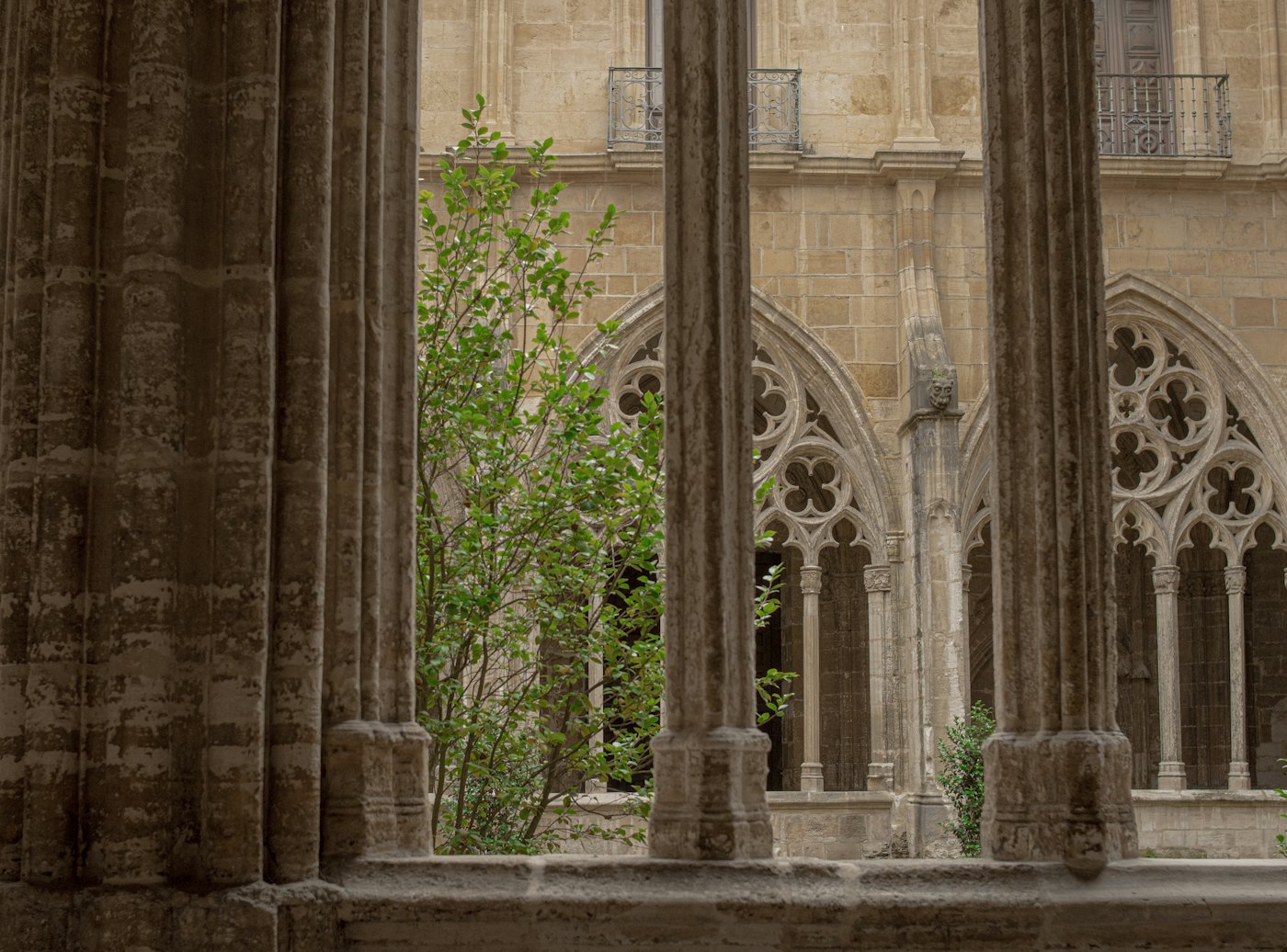
The places worth a stop, in the order they appear on the Camino del Salvador.
- Cathedral of Santa María de Regla · León (stage 1). 13th-century French Gothic, one of the jewels of European Gothic, famous for its stained glass; its museum occupies sixteen rooms around the cloister.
- Chapel of Celada · La Robla (stage 1). Next to the path before entering La Robla, from the 13th to the 17th century, with a Herrerian altarpiece and the Romanesque carving of the Virgin of Celada, patron saint of the town.
- Sanctuary of El Buen Suceso · Nocedo de Gordón (stage 2). A sanctuary with an 18th-century church, on the banks of the Bernesga.
- Collegiate church of Santa María de Arbas · Arbas del Puerto (stage 3). At a strategic point in the mountains where there was already a pilgrim hospital in the 12th century.
- Santa Cristina de Lena · Pola de Lena (stage 4). An Asturian pre-Romanesque church, next to the 18th-century birthplace of the writer Vital Aza.
- Santa Eulalia de Ujo · Ujo (stage 5). A 12th-century Romanesque church, heavily rebuilt in the 20th century and a historic-artistic monument since 1926.
- Plaza de San Juan and the Escanciador · Mieres (stage 5). The 19th-century town hall and, in the Requexu district, the monument to the Escanciador (cider pourer), surrounded by terraces where you can have a few culines of cider.
- Cathedral of San Salvador and the pre-Romanesque · Oviedo (stage 6). The goal of the route, and the Asturian pre-Romanesque, a World Heritage Site: San Julián de los Prados, the Foncalada fountain, Santa María del Naranco and San Miguel de Lillo.
When to walk the Camino del Salvador
It is a mountain route: in winter the Pajares pass may have snow and ice, and only 13 of the 20 albergues are open in January. The best time is May to October, when all the albergues are open; in summer average highs are around 25 °C, without the heat of the Meseta. August and July are the months with the most pilgrims, although it is never crowded.
| Month | Avg. high | Avg. low | Albergues open | Pilgrims 2025 |
|---|---|---|---|---|
| January | 9.6 °C | 2.0 °C | 65 % | — |
| February | 11.1 °C | 2.4 °C | 65 % | — |
| March | 14.1 °C | 4.0 °C | 80 % | 5 |
| April | 15.3 °C | 5.1 °C | 100 % | 19 |
| May | 18.4 °C | 8.1 °C | 100 % | 16 |
| June | 22.5 °C | 11.3 °C | 100 % | 13 |
| July | 25.1 °C | 13.4 °C | 100 % | 23 |
| August | 25.1 °C | 13.6 °C | 100 % | 26 |
| September | 22.5 °C | 11.6 °C | 100 % | 19 |
| October | 17.7 °C | 8.6 °C | 100 % | 8 |
| November | 12.9 °C | 5.0 °C | 70 % | 6 |
| December | 10.2 °C | 2.9 °C | 60 % | — |
How to get to León
León has very good connections with Madrid: about 12 direct trains a day, the fastest in about 2 hours. If you come along the Camino Francés, the Salvador starts in the city of León itself. When you finish in Oviedo you can return by train or bus, or continue on foot towards Santiago along the Primitivo.
Where to sleep on the Camino del Salvador
There are 20 albergues, 8 of them public, and 103 places to stay in total counting hostales, rural houses and hotels. An albergue bed costs €17.40 on average: the 6 nights come to about €104. In Poladura de la Tercia and Pajares there are few beds, so it is worth phoning ahead. Each stage lists the accommodation with price, beds and phone number, and in the accommodation finder you can filter by town.
What to eat on the Camino del Salvador
- In La Pola de Gordón, the Gordón cocido days in November, with local cecina and morcilla.
- In Pajares, suspiros, butter biscuits.
- In Pola de Lena, farines, tortos with picadillo, boroñas and Asturian pote; on the first Sunday of July, the Fiesta del Corderu, with spit-roast lamb, cider and bagpipes.
- In Mieres, pote with rabadal, peas with ham, Urbiés cheese and culines of cider by the monument to the Escanciador.
Tips for the Camino del Salvador
- Do not trust the kilometres: the stage from Poladura de la Tercia to Pajares is only 13.5 km, but with 567 m of climbing.
- Check the weather forecast before crossing the mountains: in fog or snow, the Pajares pass is dangerous.
- Take poles for the very steep descents to Pola de Lena.
- Book or phone ahead in Poladura de la Tercia, Pajares and the small villages: there are few beds.
- There is no Correos backpack transport: if you need it, look for a taxi or a local company.
- You do not need to carry much water: the longest stretch without a fountain, bar or shop is only 7.9 km, although in the mountains it is worth carrying some food.
Credential and Compostela
To sleep in the albergues you need the credencial, which you can get from parishes, Friends of the Camino associations and authorised albergues, including in León.
The Camino del Salvador ends in Oviedo and on its own does not earn the Compostela, which is requested at the Pilgrim Office in Santiago after walking at least the last 100 km. To get it, continue from Oviedo along the Camino Primitivo to Santiago.
Camino del Salvador FAQ
How many kilometres is the Camino del Salvador?
119.4 km from León to Oviedo, in 6 stages.
Where does the Camino del Salvador start?
In León, where it leaves the Camino Francés, and it ends at the cathedral of San Salvador in Oviedo.
Which is the hardest stage of the Camino del Salvador?
The one from Poladura de la Tercia to Pajares: 13.5 km with 567 m of climbing and the highest point of the route, at 1,567 m.
What does “whoever goes to Santiago and not to the Saviour” mean?
It is the medieval saying that encouraged pilgrims to also visit the relics of the Cámara Santa in Oviedo: whoever did not “visited the servant and left out the Lord”.
Does the Camino del Salvador earn the Compostela?
Not on its own, because it ends in Oviedo. You have to continue along the Camino Primitivo and walk at least the last 100 km to Santiago.
When is the best time to walk the Camino del Salvador?
From May to October, when all the albergues are open and there is no snow in the mountains.
Is there much asphalt on the Camino del Salvador?
A little under half, around 49%, mainly leaving León and in the mining valleys of Asturias. The rest is tracks, paths and mountain trails.
How many pilgrims walk the Camino del Salvador?
Very few: 135 completed the route in 2025 according to the Pilgrim Office, and 179 in 2026 up to mid-November. It is one of the quietest caminos in Spain.
How many albergues are there on the Camino del Salvador?
20, 8 of them public, with an average bed price of €17.40.
How many days does it take to walk the Camino del Salvador?
About 6 days on foot. It can be done in five by joining the last two stages, from Pola de Lena to Oviedo (31.6 km). With the planner you can split it at your own pace.
Plan your days with the planner, continue to Santiago along the Camino Primitivo or compare it with the Camino Francés. To prepare the trip see the practical guides to the Camino de Santiago or compare routes in all the Caminos.