
The legends of the Camino de Santiago are part of its magic. For more than a thousand years, pilgrims from all over Europe have woven a rich collection of miracles, symbols and mysteries that still accompany every stage today: hens that crow after being roasted, stone boats, knights covered in shells and medieval jousts on a bridge. In this guide we bring together the best-known legends and curiosities, in the order you will come across them along the Camino, so that every waymarker and every church takes on a new meaning. Knowing them makes the journey far more exciting, especially if you are travelling as a family.
Contents
The legends of the origin of the Camino de Santiago
The field of stars of Compostela
Tradition holds that at the beginning of the 9th century the hermit Pelayo saw lights over a wood that led him to a forgotten tomb. Bishop Theodemir of Iria Flavia identified it as that of the apostle Saint James, and King Alfonso II of Asturias came to venerate it: the pilgrimage was born. According to popular etymology, the name Compostela comes from that Campus Stellae, «field of stars», although many historians prefer to link it to the Latin compositum, «cemetery». You have the full story in what is the Camino de Santiago.
The stone boat and the pedrón of Padrón
The legend of the Translatio tells that, after Saint James’s martyrdom in Jerusalem, his disciples Athanasius and Theodore carried his body in a stone boat, without sails or rudder, guided by angels, which landed at Iria Flavia, next to present-day Padrón. There they moored it to a stone pillar, the «pedrón», which is still kept under the altar of the church of Santiago in Padrón and which, according to tradition, gave the town its name. Padrón is on the Camino Portugués, a day’s walk from Santiago.
Queen Lupa and the wild bulls
The disciples asked Queen Lupa, a pagan ruler of the area, for a place to bury the apostle. To get rid of them, she sent them to Mount Ilicino to fetch some oxen, knowing that wild bulls and a dragon lived there. The disciples tamed the bulls with the sign of the cross, defeated the dragon and returned with the animals yoked to the cart. Impressed, Lupa converted and gave the land where the Cathedral stands today. Since then that mountain has been called Pico Sacro, and its silhouette can be seen from several points near Santiago.
The knight covered in shells
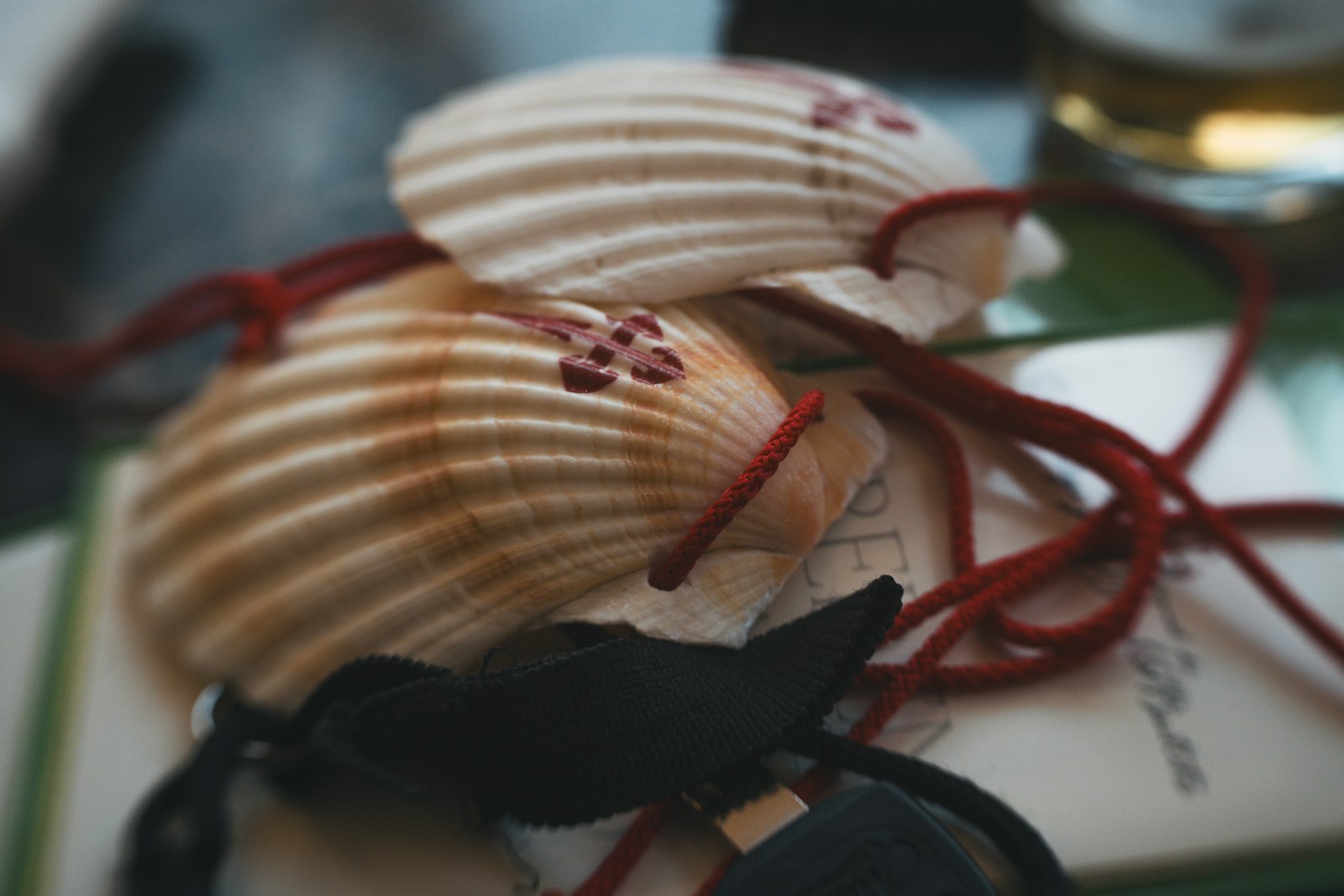
Another legend explains why the scallop shell is the pilgrim’s symbol. As the boat carrying the apostle’s body approached the Galician coast, a wedding was being held on the beach. The bridegroom’s horse bolted and plunged into the sea with its rider, who, through the apostle’s intercession, emerged from the water safe and sound… and covered in shells. Tradition places the episode in the Galician rías, and since then the scallop shell has accompanied those who make the pilgrimage. In the Middle Ages it was also used to drink water from fountains, and taking it back home was proof of having reached Santiago.
Legends of the Camino Francés
Roland and the battle of Roncesvalles
In the Pyrenees, history and epic blend together. In the year 778, the rearguard of Charlemagne’s army was defeated at the Roncesvalles pass. The Song of Roland turned that battle into legend: the hero Roland, on the point of death, blew his horn to call for help and tried to break his sword Durendal against a rock so that it would not fall into enemy hands. In the Roncesvalles area places linked to the story are still pointed out, and many pilgrims begin their Camino there.
The Virgen del Txori of Puente la Reina
In Puente la Reina, where the Camino Francés and the Aragonés meet, it is said that an image of the Virgin placed on the medieval bridge was visited by a little bird, a txori, which wet its wings in the river and cleaned her face. The locals saw its visits as a good omen. The image is now kept in a church in the town, and the Romanesque bridge is still one of the most beautiful on the Camino.
The Irache wine fountain
It is not a legend, although it seems like one: next to the monastery of Irache, on the way out of Estella, a winery has kept a fountain since 1991 from which free wine flows for pilgrims, next to a water tap. It is one of the most photographed stops on the Camino Francés. The idea, though, is to take a sip for the road, not to fill your water bottle.
The cockerel and the hen of Santo Domingo de la Calzada
It is the most famous legend of the Camino. A German couple were on pilgrimage with their son when a girl at the inn, spurned because the young man rejected her, hid a silver cup in his luggage and accused him of theft. The boy was hanged, but his parents, passing by the gallows, found him alive: Santo Domingo was holding him up. They rushed to tell the magistrate, who was about to eat and replied that the boy was as alive as the roast cockerel and hen on his plate… and the birds jumped off the plate and began to crow. Hence the saying «Santo Domingo de la Calzada, where the hen crowed after being roasted». Even today the cathedral keeps a live cockerel and hen in a Gothic coop inside.
The miracle of light at San Juan de Ortega
In the Montes de Oca, between Belorado and Burgos, the monastery of San Juan de Ortega holds a phenomenon that draws hundreds of visitors twice a year. On the days around the spring and autumn equinoxes, late in the afternoon, a ray of sunlight enters through a window of the church and lights up a Romanesque capital showing the Annunciation. The locals call it «the miracle of light». San Juan de Ortega, a disciple of Santo Domingo de la Calzada, devoted his life to building bridges, hospitals and roads for pilgrims.
The Paso Honroso of the Órbigo bridge
In 1434, in a Holy Year, the Leonese knight Suero de Quiñones, smitten with love for a lady, challenged every knight who wished to cross the bridge at Hospital de Órbigo. With his companions, he held the crossing through weeks of jousting, and when it was over he made the pilgrimage to Santiago and left an offering in the Cathedral. The episode, known as the Paso Honroso, is re-enacted every year in the village with a medieval tournament.
The Templars of Ponferrada
Ponferrada’s great castle is associated with the Order of the Temple, which according to tradition protected pilgrims in El Bierzo. Its towers and walls have fuelled legends of hidden treasure and the Holy Grail for centuries. Today it is one of the most visited monuments on the Camino Francés.
The Cruz de Ferro
On Monte Irago, near Foncebadón, an iron cross stands on a tall wooden pole. It is one of the highest points of the Camino Francés, at about 1,500 metres. Pilgrims leave at its foot a stone brought from home as a symbol of the burdens they want to let go of, and the pile has grown into a small hill. Some believe the custom predates Christianity, when travellers left stones on summits to honour the gods of the roads.
The miracle of O Cebreiro
Once in Galicia, the hamlet of O Cebreiro holds the story of a Eucharistic miracle. On a stormy day, a peasant climbed up from the valley to hear Mass, and the monk officiating, who doubted his faith, silently scorned his effort. At that moment the bread and wine turned into flesh and blood. The chalice and paten are kept in the church of Santa María, and some link that chalice to the one on the coat of arms of Galicia.
La Peregrina of Pontevedra
On the Camino Portugués, Pontevedra venerates the Virgen Peregrina, depicted with a hat, staff and gourd like any other pilgrim. Her 18th-century sanctuary has a curious floor plan in the shape of a scallop shell, and tradition considers her the protector of pilgrims on this route. It is a stop few expect and almost everyone photographs as they pass through the city.
Legends and curiosities of Santiago de Compostela
The first to see the towers is king
At Monte do Gozo, about 4 km from the Cathedral, medieval pilgrims saw the towers of Santiago for the first time. Tradition says that the first in the group to spot them shouted for joy and was proclaimed «king» of the pilgrimage, and some claim that surnames such as Rey, Leroy or König come from this. True or not, the place keeps the name of that joy: «gozo».
Lavacolla, the last wash
Before entering the city, pilgrims washed in a stream so as to present themselves clean before the apostle. The Codex Calixtinus mentions the place, and the name Lavacolla, known today above all for the airport, is said to come from that custom.
The Santo dos Croques
Behind the central column of the Pórtico de la Gloria there is a kneeling figure that tradition identifies as Master Mateo, the creator of the portico. For centuries, students and pilgrims bumped their heads against it so that it would pass on its talent to them: those knocks, the «croques», gave it its name. Today the Pórtico has been restored and protected, and it can no longer be touched.
The fingers on the central column
On the same Pórtico de la Gloria, the central column depicts the Tree of Jesse, the genealogy of Christ. For centuries, pilgrims rested their hand on it on arrival, and the touch of millions of hands left the imprint of five fingers in the marble. Like the Santo dos Croques, it is now protected to conserve the portico, but the imprint is still there as a testament to all those who came before.
The pilgrim’s shadow
At night, in the Praza da Quintana, the lighting casts onto the façade of the Cathedral the shadow of a column that looks like the silhouette of a pilgrim with hat and staff. It is one of the curiosities most sought after by those who reach Santiago. Look for it next to the Clock Tower, near the Holy Door.
The botafumeiro that flew out
The botafumeiro, the Cathedral’s great censer, weighs more than 50 kilos and is swung across the transept by eight tiraboleiros. It is said that in 1499, during the visit of Princess Catherine of Aragon, the rope broke and the censer flew out through the Platerías door. It does not fly at every Mass: you can find out when to see it in our guide to Santiago Cathedral.
The theft of the Codex Calixtinus
The Codex Calixtinus, the 12th-century manuscript containing the first pilgrim’s guide, disappeared from the Cathedral in July 2011. It was one of the great mysteries of Santiago’s recent history until the police recovered it, a year later, in a garage: the thief was a former electrician at the Cathedral.
Legends of the end of the world: Fisterra and Muxía
For the Romans, Cape Fisterra was the end of the known world, the place where the sun sank into the ocean. Many pilgrims extend their Camino there and watch the sunset from the lighthouse. The custom of burning clothes or boots on the cape is now discouraged and banned because of the fire risk. In Muxía, tradition says that the Virgin arrived in a stone boat to encourage Saint James in his preaching, and that the large rocks next to the sanctuary of the Virxe da Barca are the remains of that vessel: the Pedra de Abalar, which rocks, and the Pedra dos Cadrís, which you pass under to cure back ailments. The whole route is in the Camino de Fisterra and Muxía.
Camino curiosities you may not know
- The Milky Way was popularly called the «Camino de Santiago» because it seemed to point the way to Compostela in the night sky.
- The yellow arrow is not old: it was popularised in the 1980s by Elías Valiña, parish priest of O Cebreiro, who began painting them to waymark the Camino Francés.
- Peregrinos, romeros and palmeros: in the Middle Ages, a «peregrino» went to Santiago; a «romero», to Rome; and a «palmero», to Jerusalem.
- The Holy Year is celebrated when 25 July falls on a Sunday; the next one is Xacobeo 2027.
- Master Mateo signed the Pórtico de la Gloria with an inscription on the lintel dated 1188.
- The credential is the heir to medieval safe-conducts; we explain it in the pilgrim credential.
Living traditions of today’s pilgrims
The Camino keeps adding customs: leaving a stone on a waymarker or at the Cruz de Ferro, signing albergue guest books, greeting people with a «¡Buen Camino!», taking a photo at the 100 km marker, embracing the apostle in the Cathedral or watching the sunset at Fisterra. Each pilgrim adds their grain of sand to a story more than a thousand years old, and that feeling of being part of something huge is, for many, the most memorable thing about the journey.
Official link: If you want to delve into the history of the apostle and the church, the Santiago Cathedral website has official information.
FAQ
What is the most famous legend of the Camino de Santiago?
Probably that of the cockerel and the hen of Santo Domingo de la Calzada, where the roast birds came back to life to prove the innocence of a young pilgrim. Its cathedral still keeps a live cockerel and hen.
Where does the name Compostela come from?
According to popular etymology, from the Latin Campus Stellae, «field of stars», after the lights that led to the discovery of the tomb. Many historians link it to compositum, «cemetery».
What does the Camino de Santiago shell mean?
It is the pilgrim’s symbol. Legend links it to the knight who emerged from the sea covered in shells as the apostle’s body arrived; in the Middle Ages it was used for drinking and as proof of having reached Santiago.
Why do people leave stones at the Cruz de Ferro?
It is a Camino Francés tradition: pilgrims leave a stone brought from home as a symbol of letting go of their burdens.
What is the botafumeiro?
The gigantic censer of Santiago Cathedral, weighing more than 50 kilos, which eight tiraboleiros send flying across the transept at major celebrations.
What does «ultreia» mean?
It is a word that appears in a medieval pilgrims’ hymn recorded in the Codex Calixtinus: «e ultreia, e suseia», something like «further on, higher up». Today many pilgrims use it as a greeting and a cry of encouragement.
Why is the Milky Way called the Camino de Santiago?
Because in popular tradition it seemed to point the way to Compostela in the sky, and served as a guide for pilgrims.
With these stories, every waymarker and every church takes on a new meaning. Choose your route and plan the stages with the planner to discover them in person.