
Your Camino de Santiago gear decides a good part of how you will arrive in the Plaza del Obradoiro: shoes that rub or a badly fitted rucksack weigh more than any hill. In this section we bring together what we have learned putting together the guide to the 39 Caminos and the gear tests our editorial team carries out on real stages: footwear, rucksacks, clothing and socks, for men and for women.
If you are looking for the list of everything to put in your rucksack, you have it in what to pack for the Camino de Santiago. Here we focus on how to choose each piece of kit well.
Contents
How we test Camino de Santiago gear
We test each product where it is going to be used: on Camino stages and in our own hiking and running training. What matters to us is not how it looks in the shop, but how it performs after many kilometres in a row and several days of use. We look at these things:
- Fit and comfort at the end of a long stage, not just at the beginning.
- Chafing and blisters: whether they appear, where and after what distance.
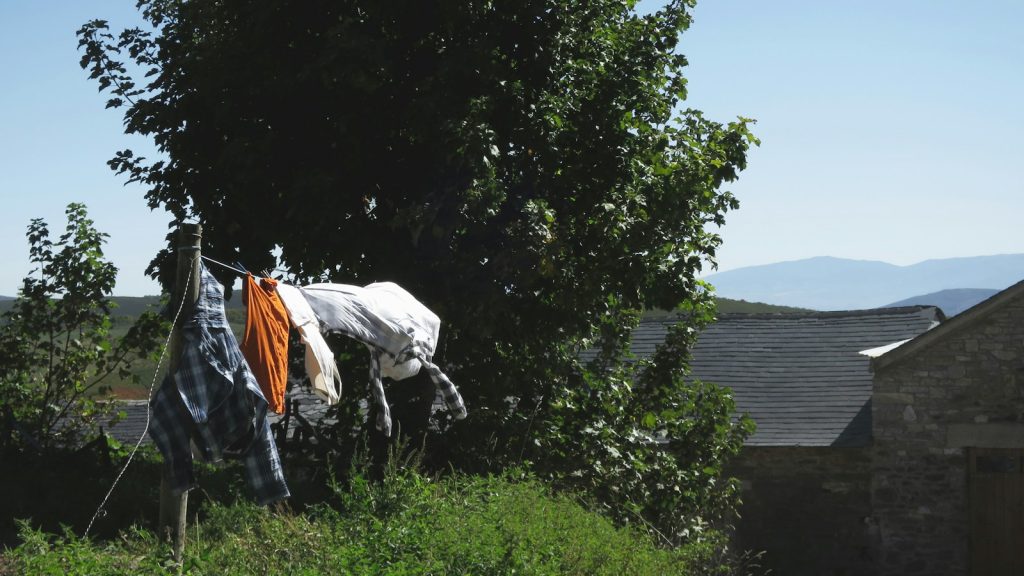
- Breathability and drying, key when you hand-wash at the albergue and your clothes have to be dry by the morning.
- Weight and bulk, because you carry everything on your back for weeks.
- Durability against mud, Galician rain and the asphalt on the way out of cities.
When the brand has a men’s and a women’s version, we test both. We tell you the good and the bad, and if a product has been lent to us by the brand, we say so in the review.
Footwear for the Camino: boots, hiking shoes or trail shoes
There is no footwear that works for every Camino and every season. Choosing well depends on the route, the season and your feet.
Hiking shoes or trail shoes
On the Camino Francés, the Portugués and most routes between spring and autumn, many pilgrims prefer shoes: they are lighter, adapt to your foot sooner and are less tiring on dirt tracks and asphalt, of which there is a lot on the Camino. Look for a sole with good grip in the wet, cushioning designed for many hours and room at the front so your toes do not touch on the descents.
Mid-cut boots
They make sense in winter, with mud or snow, on mountain routes such as the Camino Primitivo or the Camino de Invierno, or if you have weak ankles. On the other hand they are heavier and need more breaking in before you set off.
Waterproof or breathable
A waterproof membrane helps with rain and mud, but in summer your feet sweat more and take longer to dry, and a damp foot is the first step towards a blister. On the meseta in July, breathable footwear works better; in Galicia in November, waterproof.
Size and breaking in
Feet swell after several hours of walking, which is why many pilgrims choose half a size larger than usual. And one rule with no exceptions: do not wear brand-new footwear on the Camino. Do several long walks in it first, as we explain in how to train for the Camino de Santiago.
For the end of each stage, light rest shoes or sandals are almost compulsory: you have ideas in rest shoes for the Camino.
How to choose a rucksack for the Camino de Santiago
To walk the Camino sleeping in albergues, a 30 to 40 litre rucksack is enough. A bigger one usually ends up full, and you feel every extra kilo in your shoulders, back and knees. The most repeated guideline is that the total weight should not exceed 10% of your body weight, including water. When choosing one, look at:
- A padded hip belt: it transfers most of the weight to your hips and takes the load off your shoulders.
- An adjustable, ventilated back, so it fits the length of your torso and you sweat less.
- A rain cover, built-in or separate: in the north you will use it.
- Hip-belt pockets for your phone, your credential and a snack without taking off the rucksack.
- Women’s models: they have a shorter torso and differently shaped shoulder straps and hip belt; they are worth trying.
If you prefer to walk light, you can send your rucksack ahead by transport from stage to stage and carry just a small one with what you need for the day.
Clothing for the Camino: quick-drying layers
The system that works best is layering: a technical T-shirt that wicks sweat away from your skin, a light warm layer (fleece or a thin down or synthetic jacket) and a waterproof, breathable jacket. Two sets of walking clothes are usually enough: one on and one drying.
- Synthetic fabric: dries very quickly and is cheap; over the days it can build up odour.
- Merino wool: keeps you warm even when damp and smells much less after several days; it dries a little more slowly and costs more.
- Trousers: shorts or zip-off trousers in summer; hiking trousers or leggings in winter.
We have specific guides on what clothes to take on the Camino as a woman and on the extra kit for the Camino in winter.
Socks to avoid blisters on the Camino
Socks matter as much as footwear. Look for technical or merino fabrics, without seams at the toes and with reinforcement at the heel and toe. Double-layer socks reduce friction between sock and skin, and toe socks prevent blisters between the toes. Carry at least three pairs and forget cotton, which holds moisture.
If blisters still appear, in the Camino de Santiago first-aid kit guide we explain what to carry and how to treat them.
Walking poles and other accessories
Walking poles take the load off your knees on long descents and help on the climbs; if you are not used to them, try them before you set off. The kit is completed by a head torch for setting off before dawn in summer, a sleeping-bag liner or a light sleeping bag for the albergues, and a cap and sunglasses for stages without shade.
Gear reviews from our team
In this section we will publish the gear tests we carry out on the Camino: footwear, rucksacks, clothing and accessories, with what we liked and what we did not. Gear that also works for running is reviewed on Planeta Runners, our running and trail website (in Spanish).
Are you a brand or an agency? Find out how to collaborate with Buen Camino Santiago.
Frequently asked questions about Camino gear
Boots or shoes for the Camino de Santiago?
For most routes between spring and autumn, hiking or trail shoes: they are lighter and less tiring on tracks and asphalt. Boots make sense in winter, with mud or snow, on mountain routes or if you need ankle support.
How many litres should a Camino rucksack be?
Between 30 and 40 litres if you sleep in albergues. A bigger rucksack usually ends up full, and that is weight you carry on your back every day.
How much should the rucksack weigh?
The most repeated guideline is that it should not exceed 10% of your body weight, including water.
Which socks prevent blisters?
Technical or merino wool ones, without seams at the toes, and preferably double-layer or toe socks if you are prone to blisters. Avoid cotton and change your socks halfway through the stage if they get wet.
How many changes of clothes should I take?
Two sets of walking clothes are usually enough: one on and one drying. You hand-wash at the albergue every afternoon and, if the fabric is technical, it is dry by the morning.