
Camino Lebaniego Castellano
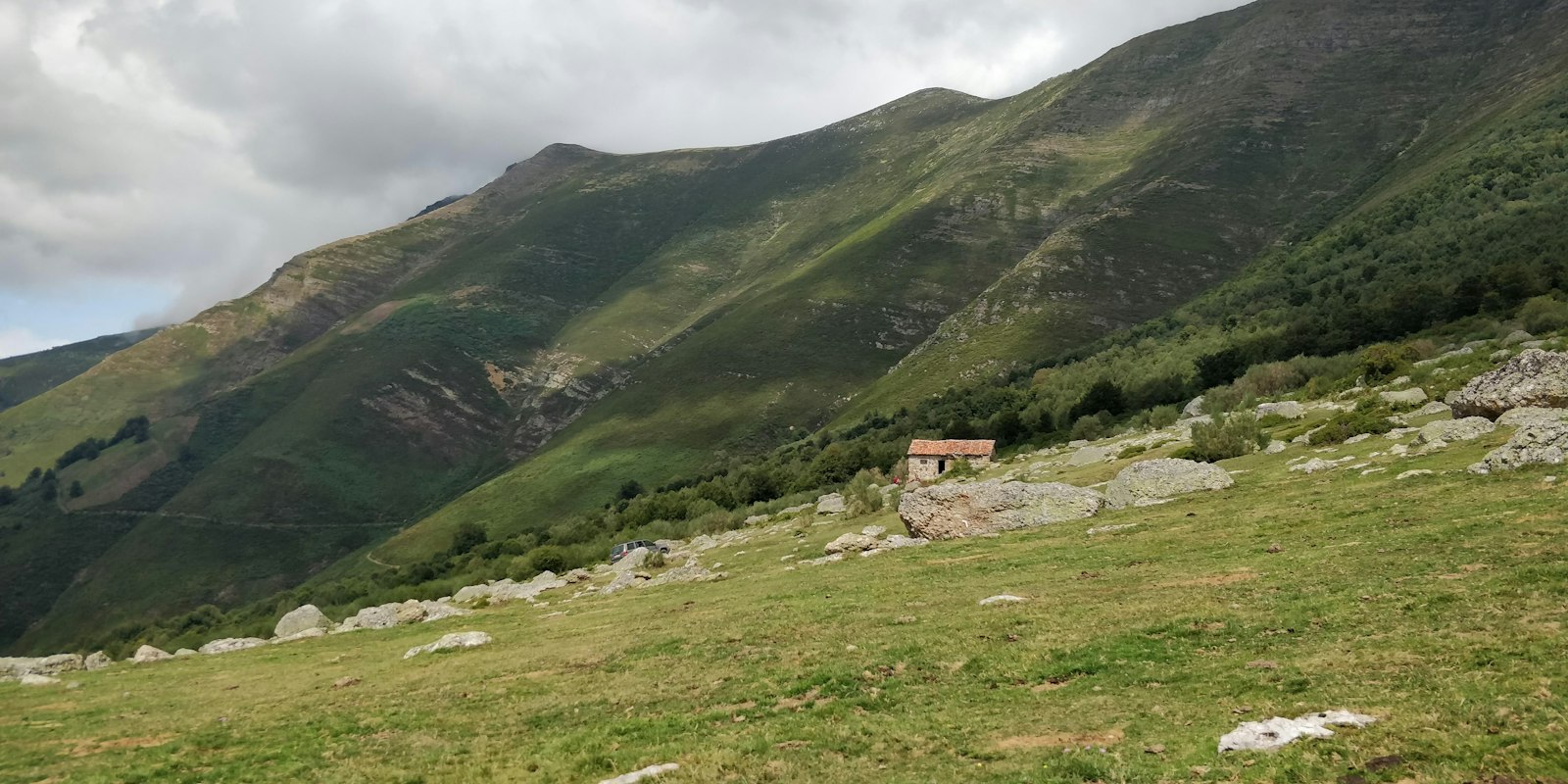
The Camino Lebaniego Castellano links Palencia with the monastery of Santo Toribio de Liébana, in Cantabria, where the Lignum Crucis is kept: it crosses Tierra de Campos via Frómista, follows the Canal de Castilla and the Pisuerga to the Montaña Palentina and enters Liébana over the Piedrasluengas pass. It covers 220.6 km in 10 stages.
You can walk it as a pilgrimage to Santo Toribio or continue towards Santiago along the Camino Vadiniense and the Francés, about 693 km from Palencia. It has 17 albergues, 7 of them public. In this guide you have the map, the stages, what to see, when to go, how to get there and where to sleep.
- The stages
- Key facts
- Stages by section
- What to see
- When to go
- Getting there
- From Santo Toribio to Santiago
- Where to sleep
- Tips
- Credential and Compostela
- FAQ
The stages of the Camino Lebaniego Castellano
The map shows the route from Palencia to Santo Toribio de Liébana and below it the 10 stages by section. Tap one to see its route, the villages, what to see and where to sleep.
Tap a point to see the stage; zoom in to see the numbers. On mobile, tap the map to move it. Route: © OpenStreetMap contributors (ODbL).
Easy Moderate Hard
Camino Lebaniego Castellano key facts
| Fact | Camino Lebaniego Castellano |
|---|---|
| Route | Palencia › Santo Toribio de Liébana (220.6 km in 10 stages) |
| To Santiago | about 693 km from Palencia, continuing along the Camino Vadiniense and the Camino Francés |
| Average per stage | 22.1 km; the longest, 31.3 km |
| Total ascent | About 2,716 m |
| Highest point | 1459 m |
| Places to stay | 88 listed, 17 of them albergues (7 public, with 492 beds) |
| Albergue bed | €15.90 on average; double room, €54 |
| Asphalt or paved | 21% of the route; 10% on roads with traffic |
| Longest section without a fountain, bar or shop | 18.3 km |
| Longest section without accommodation | 31.3 km |
| Medium difficulty | 2.6 out of 5 |
| Backpack transfer with Correos | Not available on this route |
The stages of the Camino Lebaniego Castellano by section
From Palencia to Herrera de Pisuerga: 4 stages and 99.5 km
It leaves Palencia via Grijota and Amayuelas de Abajo to Frómista, on the Camino Francés, and continues via Osorno la Mayor and the Canal de Castilla to Herrera de Pisuerga. It is the flattest section, with two stages of over 30 km.
From Herrera de Pisuerga to Cervera de Pisuerga: 2 stages and 48.8 km
Via Alar del Rey, where the Canal de Castilla begins, and the villages of La Ojeda, the path climbs towards the Montaña Palentina to Cervera de Pisuerga.
From Cervera de Pisuerga to Santo Toribio: 4 stages and 72.3 km
The mountain section: San Salvador de Cantamuda, Camasobres and the Piedrasluengas pass, on the highest stage of the route, then down into Liébana via Pesaguero and Cabezón de Liébana to the monastery of Santo Toribio. See the stage Pesaguero › Santo Toribio.
What to see on the Camino Lebaniego Castellano
These are the places you should not miss:
- Ribas de Campos hydroelectric plant, in Ribas de Campos (on the Heritage Red List)
- Church of San Martín de Tours, in Frómista (listed heritage site)
- Jurisdictional pillar of Boadilla del Camino, in Boadilla del Camino (listed heritage site)
- Pisoraca, in Herrera de Pisuerga (listed heritage site)
- River port of Alar del Rey, in Alar del Rey (on the Heritage Red List)
- Church of Santa María del Castillo (Cervera de Pisuerga), in Cervera de Pisuerga (listed heritage site)
- Collegiate church of San Salvador, in San Salvador de Cantamuda (listed heritage site)
- Cueva de los Burros, in Camasobres (listed heritage site)
- Torre del Infantado, in Potes (part of a World Heritage Site)
When to walk the Camino Lebaniego Castellano
The best time is May to October. In winter it may snow at Piedrasluengas and in the Montaña Palentina. In the Lebaniego Jubilee Years there are more pilgrims heading for Santo Toribio. The average high on the route is 27 °C in July and 27 °C in August, and the average low in January, 0.5 °C. Of the 17 albergues with opening dates, 8 are open in January, 14 in May and 14 in August.
| Month | Average high | Average low | Rainy days | Albergues open |
|---|---|---|---|---|
| January | 8.4 °C | 0.5 °C | 8.4 | 8 of 17 |
| February | 10.1 °C | 0.5 °C | 7.6 | 9 of 17 |
| March | 13.6 °C | 2.3 °C | 6.7 | 12 of 17 |
| April | 15 °C | 3.9 °C | 9.6 | 13 of 17 |
| May | 18.6 °C | 7 °C | 9.4 | 14 of 17 |
| June | 23.4 °C | 10.2 °C | 6 | 14 of 17 |
| July | 27 °C | 12.5 °C | 4.2 | 14 of 17 |
| August | 27 °C | 12.6 °C | 4.2 | 14 of 17 |
| September | 23.3 °C | 10.1 °C | 5.9 | 14 of 17 |
| October | 17.9 °C | 7.1 °C | 8.8 | 14 of 17 |
| November | 12.1 °C | 3.4 °C | 9.5 | 10 of 17 |
| December | 9.1 °C | 1.5 °C | 9.7 | 7 of 17 |
Temperatures and rain: route averages, using the normals from the weather station closest to each stage end. Open albergues: our own analysis of each albergue's opening dates.
How to get to Palencia to start the Camino Lebaniego Castellano
From Madrid there are 19 direct trains a day to Palencia, the fastest in 1 h 21 min.
Source: Renfe timetables checked on 12/11/2026. Check those for the day you travel at renfe.com.
You can also start in Frómista or Cervera de Pisuerga. With the planner you choose the starting point and the days you have.
From Santo Toribio to Santiago
From Santo Toribio and Potes you can continue towards Santiago along the Camino Vadiniense, which crosses the Picos de Europa via Espinama and Riaño to Mansilla de las Mulas, on the Camino Francés. The next stage is Potes › Espinama.
Where to sleep on the Camino Lebaniego Castellano
We have 88 places to stay listed on the Camino Lebaniego Castellano, including 17 albergues, 7 of them public. An albergue bed costs €15.90 on average and a double room €54.
This table shows what there is at each stage end. The accommodation finder for the Camino Lebaniego Castellano has them all, with price, phone number and website.
| Stage | Stage end | Albergues | Bed from | Other accommodation |
|---|---|---|---|---|
| 1 | Amayuelas de Abajo | 1 | — | 0 |
| 2 | Frómista | 5 (1 pub.) | 15 € | 5 |
| 3 | Osorno la Mayor | 1 (1 pub.) | Donation | 2 |
| 4 | Herrera de Pisuerga | 1 (1 pub.) | 20.5 € | 1 |
| 5 | Perazancas de Ojeda | 1 (1 pub.) | — | 2 |
| 6 | Cervera de Pisuerga | 1 (1 pub.) | — | 8 |
| 7 | San Salvador de Cantamuda | 0 | — | 2 |
| 8 | Camasobres | 0 | — | 1 |
| 9 | Pesaguero | 0 | — | 1 |
| 10 | Monastery of Santo Toribio de Liébana | 1 | — | 2 |
Indicative prices of the cheapest albergue bed; "—" means we do not have the price. Always phone the day before.
Tips for the Camino Lebaniego Castellano
- Prepare for the Piedrasluengas crossing. It is the highest and most exposed section: check the weather before leaving Camasobres.
- Watch the long stages. 3 stages are over 30 km. Use the planner to split the route into days that suit you.
- Carry water. The longest stretches without a fountain, bar or shop are 18.3 km on Perazancas de Ojeda › Cervera de Pisuerga; 17.7 km on Camasobres › Pesaguero; 17.2 km on Palencia › Amayuelas de Abajo.
- Phone the albergues ahead, especially out of season.
- Count the daylight hours. In January there are about 9.3 hours of daylight a day and in June, up to 15.4.
- There is no Correos backpack transport on this route. Travel light.
- Prepare the trip with our guides to the first-aid kit, useful apps and what to pack.
Credential and Compostela
The credencial is the document that identifies you as a pilgrim: it gives access to the albergues and is the proof you need to request the Compostela. The official model is issued by the Pilgrimage Office of Santiago Cathedral and can be obtained from parishes, Friends of the Camino associations, albergues and authorised confraternities. More details in our guide to the pilgrim credencial.
For the Compostela you must walk at least the last 100 consecutive km to Santiago (200 km by bike), getting your credencial stamped twice a day on that stretch. Continuing along the Vadiniense and the Camino Francés, the nearest qualifying start is A Pena (Paradela), 100 km away. At Santo Toribio you can also ask for the Lebaniega, the certificate of the pilgrimage to Liébana. It is collected in person at the Pilgrim Office.
Camino Lebaniego Castellano FAQ
How many kilometres is the Camino Lebaniego Castellano?
220.6 km from Palencia to Santo Toribio de Liébana in 10 stages. To Santiago: about 693 km from Palencia, continuing along the Camino Vadiniense and the Camino Francés.
How many days does it take to walk the Camino Lebaniego Castellano?
10 days from Palencia to Santo Toribio de Liébana, at an average of 22.1 km a day. With the planner you can spread it over the days you have.
Which is the longest stage of the Camino Lebaniego Castellano?
The one from Palencia to Amayuelas de Abajo, with 31.3 km.
Are there albergues on the Camino Lebaniego Castellano?
Yes: 17 albergues, 7 of them public, at an average of €15.90 per bed. You will find them in the accommodation finder.
Where does the Camino Lebaniego Castellano end?
At the monastery of Santo Toribio de Liébana, next to Potes, in Cantabria.
Plan your days with the planner and, from Potes, continue along the Camino Vadiniense. To prepare the trip see the practical guides to the Camino de Santiago or compare other routes in all the Caminos.