

Sigüeiro → Santiago de Compostela
Updated on 19 November 2026 by the Buen Camino Santiago team
Stage map
Start in green, finish in red and villages along the way in yellow, in order by kilometre.
Towns and services
| Town | Km | ATM | Pharmacy | Shop | Bar/Rest. | Bed | Health | Notes |
|---|---|---|---|---|---|---|---|---|
| Sigüeiro | 0 | ✓ | ✓ | ✓ | ✓ | ✓ | ✓ | |
| A Barciela | 0.9 | · | · | · | · | · | · | |
| Marantes | 4.2 | · | · | · | · | · | · | |
| Meixonfrío | 13.3 | · | · | · | · | · | · | |
| Santiago de Compostela | 16.1 | ✓ | ✓ | ✓ | ✓ | ✓ | ✓ |
✓ available · · not available. Approximate distances from the start. In the low season some bars may close.
Elevation profile
Approximate elevation profile. In the stage data, elevation marked with ~ is an estimate; without ~, it is verified data.
Route: Rutas de Caminos de Santiago 2020-2026, CC BY 4.0 FEAACS. Split into stages by BuenCaminoSantiago.com
The Sigüeiro – Santiago de Compostela stage is stage 6 of the Camino Inglés: 15.7 km with 255 m of total ascent and 227 m of descent, about 4 hours of walking. Its difficulty is 1 out of 5 and its scenery 2 out of 5.

Contents
Sigüeiro – Santiago de Compostela stage: key facts
- Distance: 15.7 km
- Elevation: 255 m of ascent and 227 m of descent
- Duration: about 4 hours
- Highest point: 349 m
- Surface: 75% on asphalt, concrete or streets; 5% on roads with traffic
- Longest section without a fountain, bar or shop: 5.6 km
- Longest section without accommodation: 8.5 km
- Distance to Santiago from Sigüeiro: 15.7 km
From Sigüeiro to Santiago de Compostela, step by step
This Camino Inglés stage links Sigüeiro and Santiago de Compostela in 16.1 kilometres. It is part of the section shared by both branches and ends in Santiago de Compostela.
From Sigüeiro to Santiago de Compostela, 15.7 km. A stage with gentle ups and downs: 255 m of total ascent and 227 m of descent; the highest point is at 349 m. It passes Formarís, Polígono do Tambre and O Meixonfrío.
75% is on asphalt, concrete or streets and 5% on roads with traffic; the rest is on dirt tracks and paths. Water and bars are well spread out: the longest stretch with no fountain, bar or shop is 5.6 km.
There is accommodation in 3 of the 4 places on the stage (not counting the start); the longest section with nowhere to sleep is 8.5 km. Difficulty 1 out of 5 and scenery 2 out of 5.
| Place | Km from Sigüeiro | Km to Santiago | Places to stay | Services |
|---|---|---|---|---|
| Sigüeiro | 0 | 15.7 | 11 | all services |
| Torre de Marantes | 1 | bar | ||
| A Sionlla de Abaixo | 0 | restaurant | ||
| Formarís | 8.5 | 7.2 | 1 | bar, restaurant |
| Polígono do Tambre | 10.9 | 4.8 | 0 | bar, restaurant |
| O Meixonfrío | 12.5 | 3.2 | 2 | all services |
| Santiago de Compostela | 15.7 | 0 | 41 | all services |
Terrain and surface
Dirt tracks and corredoiras (sunken lanes) with short climbs, and asphalted town streets leaving Sigüeiro and entering Santiago de Compostela.
What to see on stage 6 of the Camino Inglés
- Santiago de Compostela Cathedral (Catedral Basílica Metropolitana) (Santiago de Compostela). Baroque and Romanesque Catholic cathedral, 9th century, work of Fernando de Casas Novoa. Protection: part of a World Heritage Site. Must-see.
- Colegio de San Jerónimo (Santiago de Compostela). School, 16th century. Protection: part of a World Heritage Site. Must-see.
- Monastery of San Martín Pinario (Santiago de Compostela). Baroque and Renaissance monastery, 10th century. Protection: part of a World Heritage Site. Must-see.
- Praza do Obradoiro (Santiago de Compostela). Square, 12th century. Must-see.
- Pórtico de la Gloria (Santiago de Compostela). 12th century. Must-see.
- Puerta de Platerías (Santiago de Compostela). 12th century. Must-see.
- Fuente de los Caballos (Santiago de Compostela). 18th century. Must-see.
- Hostal de los Reyes Católicos (Santiago de Compostela). 15th century. Must-see.
- Palace of Raxoi (Santiago de Compostela). 18th century. Must-see.
- Centro histórico (Santiago de Compostela). Must-see.
Where to sleep in Santiago de Compostela
Santiago de Compostela has 41 places to stay in our guide. Public albergues: San Lázaro pilgrim residence (80 beds, €10). All of them, with price, beds and contact details, in the Santiago de Compostela accommodation finder.
Weather and daylight hours in Santiago de Compostela
Average temperatures from the Santiago de Compostela Aeropuerto weather station (1981–2010), the nearest to Santiago de Compostela, and sunrise and sunset times.
| Month | High (°C) | Low (°C) | Sunrise | Sunset |
|---|---|---|---|---|
| January | 11.2 | 4.1 | 09:02 | 18:24 |
| February | 12.5 | 4.1 | 08:32 | 19:04 |
| March | 15 | 5.4 | 07:47 | 19:39 |
| April | 16.1 | 6.2 | 07:53 | 21:15 |
| May | 18.6 | 8.5 | 07:11 | 21:49 |
| June | 22.2 | 11.3 | 06:55 | 22:14 |
| July | 24.3 | 13 | 07:09 | 22:10 |
| August | 24.7 | 13.3 | 07:40 | 21:36 |
| September | 22.8 | 11.9 | 08:13 | 20:44 |
| October | 18.1 | 9.5 | 08:47 | 19:51 |
| November | 14.1 | 6.7 | 08:26 | 18:10 |
| December | 11.9 | 5 | 08:58 | 18:00 |
The stage with a pet or by bike
In Santiago de Compostela there are 2 places to stay that accept pets. 16 places to stay store bicycles.
What to see along the way
Sigüeiro
The bridge over the Tambre and the way out towards the municipality of Santiago.
A Barciela
The first village in the municipality of Santiago after crossing the Tambre.
Marantes
A small village on the way, mentioned in the official stage description.
A Lameira de Abaixo
A village on the way before the Tambre business park.
Tambre business park
An industrial area on the approach to Santiago; the route follows Vía Galileo and Rúa do Tambre.
Meixonfrío
A district where there was once an inn for refreshing pilgrims and travellers; around the Cruceiro da Coruña.
As Cancelas / San Caetano
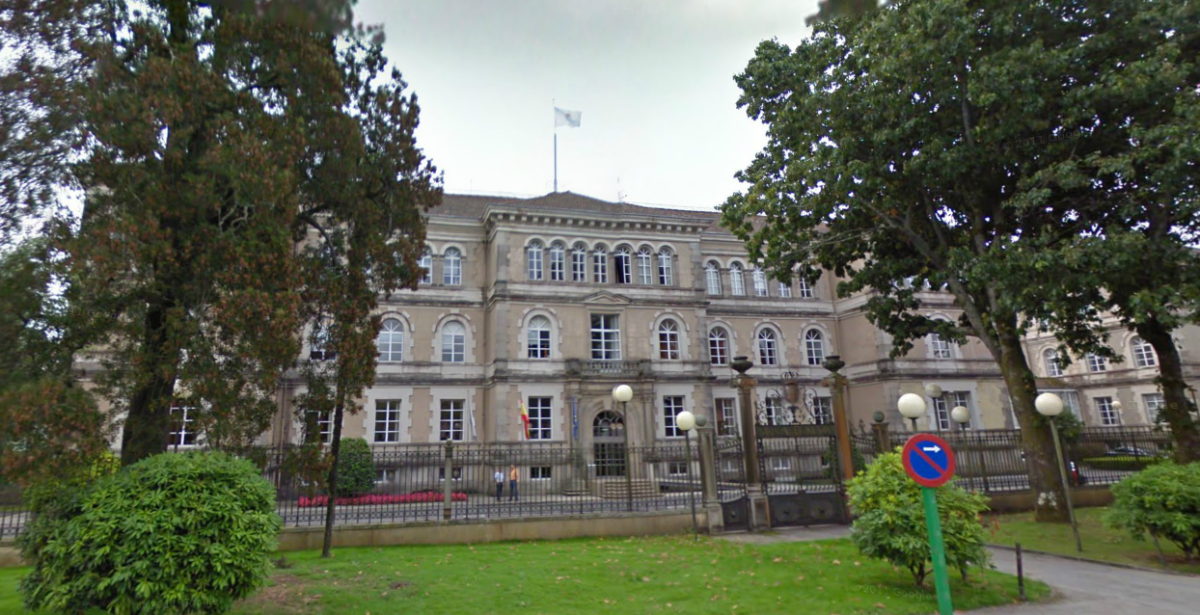
The urban entry into Santiago; the government building of San Caetano and the pilgrim monument.
Porta da Pena / Santa Clara
The convent of Santa Clara and the Porta da Pena, a former gateway to the walled city.
Santiago de Compostela / Praza do Obradoiro
Santiago Cathedral, the Praza do Obradoiro and the World Heritage old town.
The weather in Santiago de Compostela
Loading the weather…
Data: Open-Meteo · 3-day forecast, for guidance only.
Heritage on this stage
Parque do Carboeiro and river crossing Urban and riverside landscape
SigüeiroA green area that softens the approach to Sigüeiro with paths and a small bridge. It closes the stage with a transition from the industrial estate to the town centre.
Ponte de Sigüeiro over the Tambre Puente histórico
SigüeiroA crossing that links Sigüeiro and the historic route over the River Tambre. It is the great landmark at the end of this stage and of the final departure towards Santiago.
Ribera del Tambre en Sigüeiro Paisaje fluvial
SigüeiroThe river, its banks and the bridge form a single landscape before the section alongside the N-550. It explains the town's historic position and the need for a stable crossing.
Porta da Pena Acceso histórico urbano
Santiago de CompostelaThe entry point to the old town along a line of streets leading towards San Martiño Pinario. It marks the symbolic change from the modern city to the monumental goal.
Monasterio de San Martiño Pinario Monasterio
Santiago de CompostelaA monumental monastic complex beside the Cathedral and the Praza da Inmaculada. It accompanies the last metres along Rúa da Troia and Acibechería.
Praza da Inmaculada and the Acibechería façade Conjunto monumental
Santiago de CompostelaA square bounded by San Martiño Pinario and the north façade of the Cathedral. It recalls the old Puerta del Paraíso and welcomes pilgrims before they reach the Obradoiro.
Pazo de Xelmírez Palacio episcopal
Santiago de CompostelaA palace attached to the north side of the Cathedral, whose passageway is part of the final sequence. Its link with the see of Compostela explains the power that historically organised the pilgrims' goal.
Catedral de Santiago de Compostela Cathedral and sanctuary
Santiago de CompostelaThe sanctuary of the Apostle Santiago and the spiritual, artistic and urban heart of the pilgrimage. It is the symbolic goal of the Camino Inglés and of all the other Camino routes.
Praza do Obradoiro Conjunto monumental
Santiago de CompostelaThe great arrival square, surrounded by the Cathedral, the Pazo de Raxoi, San Xerome and the Hostal dos Reis Católicos. It closes the measured distance and hosts today's arrival ritual.